
scripod.com

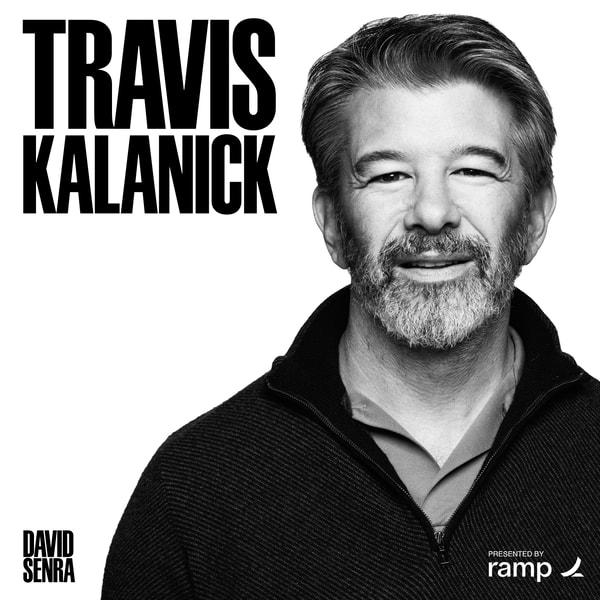
Travis Kalanick, Founder of Uber & Atoms
David Senra

21 HOURS AGO
David Senra

David Senra

21 HOURS AGO

Shownote

Travis Kalanick is best known for co-founding Uber and building it into one of the world’s largest transportation platforms. Before Uber, he spent years building Red Swoosh under extreme financial pressure. He says he took no salary for its first four years, repeatedly ran out of money and lost much of his social life to the company before eventually selling it. He later invested much of the proceeds in friends’ startups, becoming the first investor in Expensify. Kalanick started Uber at 33 and carried the intensity of those earlier years into the company. He describes operating with “precision, perfection and obsession” and continued running Uber with the mentality of someone worried about making the next grocery bill even after the company had reached a valuation of roughly $70 billion. Under his leadership, Uber expanded rapidly across cities and countries, creating a new category of app-based transportation and challenging the entrenched taxi systems that controlled many local markets. Uber’s growth depended on empowering young operators to build markets from scratch while maintaining tight control over the decisions that mattered most. Kalanick personally participated in the pricing process for the company’s first 20 to 30 cities, using each launch to refine a playbook that could eventually operate without him. He describes this management philosophy as finding the line between order and chaos: using the fewest possible rules while preserving the structure required to move quickly at scale. After leaving Uber, he returned to company building within months. His current company, Atoms [https://atoms.co/], is developing artificial intelligence and specialized robotics for industries including food, mining and transportation. Kalanick describes his role as “problem solver in chief,” focusing on the most consequential problems that are not already being solved and pursuing what he considers his broader calling: digitizing the physical world. Show notes: https://www.davidsenra.com/episode/travis-kalanick [https://www.davidsenra.com/episode/travis-kalanick] Made possible by Ramp: https://ramp.com [https://ramp.com] AppLovin: https://applovin.com/senra [https://applovin.com/senra] Deel: https://deel.com/senra [https://deel.com/senra] Chapters (00:00:00) Building Atoms & the Meta Problem of Management (00:03:51) The Appeal of Impossible Problems: Starting Over in China (00:12:19) Uber vs. Didi: Copycats, Hypergrowth & China's Rules (00:21:02) How Network Effects Become an Efficiency Fortress (00:31:48) Capitalism vs. the Taxi Cartel (00:44:05) The China War Goes Global & the Entrepreneur's Capacity for Pain (00:54:04) Life After Uber: Lawfare, Media Narratives & Reputation (00:58:21) What Founders Get Wrong About Venture Capital (01:08:35) The Fundraising Playbook: QED Storytelling & a Five-Room Auction (01:18:38) The Uber Coup, Radical Accountability & Outgrowing Fear (01:26:42) Why Specialized Robots Beat Humanoids at Industrial Scale (01:31:30) Finding Your Sport: Food, Mining & the Physical AI Stack (01:40:14) How to Build Many Companies Inside One Company (01:46:33) Entropy, Civilization & the Meaning of Progress Learn more about your ad choices. Visit megaphone.fm/adchoices [https://megaphone.fm/adchoices]

Highlights

This conversation examines the pressures of building ambitious companies, the lessons of Uber’s global expansion, and the organizational principles shaping Travis Kalanick’s work on physical-world technology.
03:09
Growth must not outpace problem-solving capacity.
06:55
China forced Uber to start over
18:24
Disruption must adapt to local stability
27:00
Efficiency eventually outlasts subsidies.
41:31
Regulation can make competition illegal.
47:15
Resilience should preserve urgency, not erase it.
56:52
Founders do not necessarily listen to venture capitalists.
1:04:11
A good investor’s first job is to do no harm.
1:12:13
Let the market determine the price.
1:25:13
Fear can start you, but it cannot finish you
1:26:42
Specialized robots scale better than humanoids
1:37:16
Specialized robots can expand industrial capacity.
1:45:52
Minimal rules create order without killing innovation
1:46:33
Civilization advances by slowing entropy

Chapters

Building Atoms & the Meta Problem of Management
00:00
The Appeal of Impossible Problems: Starting Over in China
03:51
Uber vs. Didi: Copycats, Hypergrowth & China's Rules
12:19
How Network Effects Become an Efficiency Fortress
21:02
Capitalism vs. the Taxi Cartel
31:48
The China War Goes Global & the Entrepreneur's Capacity for Pain
44:05
Life After Uber: Lawfare, Media Narratives & Reputation
54:04
What Founders Get Wrong About Venture Capital
58:21
The Fundraising Playbook: QED Storytelling & a Five-Room Auction
1:08:35
The Uber Coup, Radical Accountability & Outgrowing Fear
1:18:38
Why Specialized Robots Beat Humanoids at Industrial Scale
1:26:42
Finding Your Sport: Food, Mining & the Physical AI Stack
1:31:30
How to Build Many Companies Inside One Company
1:40:14
Entropy, Civilization & the Meaning of Progress
1:46:33

Transcript

David Senra: I want to start with Atoms. Travis Kalanick: Yeah. David Senra: You have this great line on the website that I actually love. It's this awesome sentence. It says, physical world autonomy requires AI for the physical world. This kind of intel...