
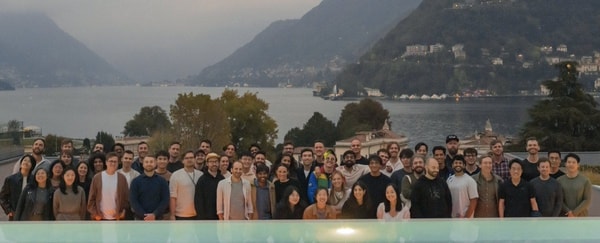
Why AI Infrastructure must evolve for Agent Experience — Akshat Bubna, Modal CTO
Shownote
Shownote
We’ve been running a bit of an Agent Cloud series surveying all the top
inference/compute/cloud providers, from Databricks
[https://www.latent.space/p/databricks] to Daytona
[https://www.latent.space/p/daytona] to Railway
[https://www.latent.space/p/railway] and, even further back, E2B
[https://www.latent.space/p/e2b?utm_source=publication-search], but we’re
excited to conclude this series returning to Modal, which has just raised a
monster $355M Series C [https://modal.com/blog/modal-series-c].
The cloud was built for developers. But agents are now changing that.
The old infra stack was designed for a human who could read docs, reason through
YAML, and understand dashboards to figure out what they need when something
broke. While this was painful for developers, it worked since they could fill in
missing context in their heads.
However, agents don’t have that luxury. Now in this new era of agents,
everything has to be tighter.
They need a place to write code, run it, inspect the output, change the
environment, debug failures, and try again. Fast iteration and feedback loops
with all the necessary context are crucial for agents to operate properly.
Furthermore, sandboxes are a clear representation of this shift as agents can
easily spin up isolated environments. This programmatic infra even extends to
research:
Two years ago, we were one of the first to cover Modal with CEO Erik
Bernhardsson and Alessio designed our favorite LS thumbnail of all time:
At the time, Modal was just a teeny little company with a $17M Series A
[https://tracxn.com/d/companies/modal/__tHK2ShUcB0Q1o6j-hbJ-xcZMxDsw0P3kCJ85veVeYjU].
Today, fresh off their $355M Series C, Modal is one of the clearest examples of
the agent cloud future being built in real time: a cloud platform moving past
traditional web app assumptions toward the workloads AI actually creates such as
elastic inference [https://modal.com/products/inference], sandboxes
[https://modal.com/products/sandboxes], GPU burst, post-training, background
agents, and infrastructure that agents themselves can operate
[https://modal.com/solutions/coding-agents].
In this episode, Modal CTO Akshat Bubna joins swyx and Vibhu to unpack why AI
applications don’t fit traditional cloud assumptions, why Kubernetes was never
designed for bursty compute-heavy workloads, and why Modal is now shifting from
developer experience to agent experience.
We go deep on Modal’s AI infra stack: serverless functions, decorator-based
infrastructure, elastic inference for custom models, GPU snapshotting, DeFlash,
speculative decoding, Auto Endpoints, sandboxes, persistent storage, networked
containers, private IPv6, RDMA, multi-node training, and Modal’s capacity pool
across 17 cloud providers. Akshat also explains why RL rollouts can require
100,000 sandboxes, why production agents need hard guardrails, why observability
may matter more than reading code, and why AI has made infrastructure exciting
again.
We discuss:
* Why Kubernetes wasn’t built for bursty AI workloads
* How Modal started as a better runtime before becoming an AI cloud
* Why Modal added GPUs before ChatGPT
* The shift from developer experience to agent experience
* Why observability matters when agents are writing the code
* Elastic inference for custom models across audio, video, robotics, and comp
bio
* GPU snapshotting, cold starts, and why inference workloads are so bursty
* Why RL rollouts can require 100,000 sandboxes
* DeFlash, speculative decoding, and frontier-level inference performance
* Auto Endpoints and making optimized inference easier to deploy
* What Modal adds beyond vLLM, SGLang, and raw GPU rental
* Modal’s 17-cloud capacity pool and supercloud strategy
* Networked sandboxes, sidecars, private IPv6, and RDMA
* Serverless multi-node training for post-training and research workloads
* Auto-research, model-guided sweeps, and agents launching GPU experiments
* Compute strategy, capacity planning, and batch tiers
* Why production agents need specialized sandboxes and hard guardrails
* Modal’s take on managed agents, CI, Gitpod/Ona, Python, TypeScript, and Modal
Bench
Akshat Bubna
* LinkedIn: https://www.linkedin.com/in/akshat-bubna-188885103
[https://www.linkedin.com/in/akshat-bubna-188885103]
* X: https://x.com/akshat_b [https://x.com/akshat_b]
Modal
* Website: https://modal.com [https://modal.com]
Timestamps
00:00:00 Introduction
00:00:39 Modal’s origin and why Kubernetes wasn’t enough
00:04:32 Developer Experience → Agent Experience
00:06:21 Modal’s AI cloud primitives
00:09:14 Sandboxes, agent loops, and proto-Cognition
00:12:12 Elastic inference, GPU snapshotting, and 100,000 sandboxes
00:15:24 DeFlash, speculative decoding, and Auto Endpoints
00:19:59 Production-grade inference beyond raw GPUs
00:22:00 Background agents, Ramp Inspect, and the agent lifecycle
00:24:08 Modal’s 17-cloud supercloud strategy
00:26:40 Networked sandboxes, private IPv6, and RDMA
00:32:48 Multi-node training, post-training, and auto research
00:37:36 Compute strategy, capacity planning, and batch tiers
00:40:55 Open models, real-time AI, and production agent infra
00:43:06 Hard guardrails, managed agents, and specialized sandboxes
00:46:06 Why AI made infrastructure exciting again
00:48:30 Model APIs, differentiated products, and agentic video
00:51:50 CI, coding-agent infra, SDKs, and Modal Bench
00:57:28 Closing Thoughts
Transcript
Introduction: Modal, Series C, and the Art Party
Swyx [00:00:00]: We’re here with Akshat, CTO of Modal, together with Vibhu.
Congrats on your Series C.
Akshat [00:00:10]: Thank you.
Swyx [00:00:11]: Your party yesterday was amazing.
Akshat [00:00:15]: Yeah.
Swyx [00:00:15]: From all the photos and all the swag.
Akshat [00:00:17]: We had a bunch of art installations, which was fun, seeing,
like, our products on pedestals next to, like, Rodin.
Swyx [00:00:25]: Very nice. Very nice. When you started, it was not the GPU
inference company. Maybe it was in your mind. Take us back to the origin story.
Modal’s Origin: A New Runtime Beyond Kubernetes
Akshat [00:00:39]: I first met Eric, who’s the CEO, through an investor. Back
then Eric was already thinking about building, a new runtime, and he got there
thinking through why are workflow orchestration products so hard to use. It’s
because you have to run them on Kubernetes. Kubernetes is hard to manage. It’s
not built for burstiness and, custom images,
Swyx [00:01:03]: Yeah
Akshat [00:01:03]: It has a terrible developer experience.
Swyx [00:01:05]: And I’ll, I’ll interject
Akshat [00:01:06]: Yeah
Swyx [00:01:07]: For listeners, who are new, we interviewed Eric two years ago,
and there’s a bit more of the story there from Spotify and all those things.
Swyx [00:01:14]: And I came across Eric through Data Council because he did that
talk on the serverless container stack that you guys did, which was like, that
was my first like, “Okay, I need to take Modal very seriously” moment.
Akshat [00:01:26]: Yeah.
Swyx [00:01:26]: But it was still very unclear, like, do I need all this for
just my data pipelines?
Akshat [00:01:33]: Yeah. initially what we were thinking about was if we build a
better runtime, it’s a very useful primitive in itself. It’s There’s a lot of
things that, get solved by serverless functions, like you can do, ETL stuff, you
can do job queues, you can do all this, like, bursty processing, which it turns
out every company had needs for. but then we also were thinking about this as
like, this is a primitive that we can build a whole collection of products on,
which are very verticalized. So perhaps data engineering would’ve been the first
one, but we were thinking about inference. Back then it was more classical
inference, like computer vision stuff and running XGBoosts and whatnot. But we
added GPUs to the product a year before ChatGPT came out.
From Serverless Containers to GPU Workloads
Swyx [00:02:19]: Nice.
Akshat [00:02:19]: We just didn’t think it would be that big of a deal.
Swyx [00:02:22]: Yeah, just like add A100.
Vibhu [00:02:23]: Was there any, like, early key problem that really sparked off
why you built it?
Akshat [00:02:28]: Yeah. Primarily it’s just, none of the tooling that was out
there was built for, one, a really great developer experience, and also there’s
a general trend of, a lot of the workloads that we were seeing were very. I wish
there was a better word for it, but compute-heavy. Like, they need, one, like,
need a lot more resources, so you need to burst up and down a lot, versus like
Kubernetes designed for, like, slow scaling and, more for, like, web server use
cases. And also there’s just a lot more specialization in, like, what kinds of
environments these workloads run in. Like, we had sometimes they need
accelerators, sometimes they need different kinds of images, and this is just
like a consistent thing that we saw across a lot of companies. That would be the
next step.
Software-Defined Infrastructure and Decorator-Based DX
Swyx [00:03:13]: Yeah. Yeah. Be nice. I don’t know how much this factored into
the early story, but I wrote a post when I was at Temporal about infrastructure,
software-defined infrastructure or something like that.
Akshat [00:03:22]: Yeah, the self-provisioning
Swyx [00:03:23]: Self-provisioning.
Akshat [00:03:24]: Yeah.
Swyx [00:03:24]: Yeah. I can’t even remember my own post.
Swyx [00:03:26]: And then you put me on the landing page.
Akshat [00:03:28]: Yeah. We really like, the term and so we stole it.
Swyx [00:03:32]: Because you had the insight that everything can just be in
decorators co-located with the code, right?
Akshat [00:03:37]: Yeah.
Swyx [00:03:37]: Was that a big part of the original
Akshat [00:03:39]: Yes
Swyx [00:03:39]: Story or it was just like a DX layer?
Akshat [00:03:41]: That was, really important because we really didn’t want
people to spend, so much time, writing YAML, and it seemed like you could really
condense the surface area of what you’re doing, put it in code so you can
operate on it just like you operate on other code, and like build stuff that’s
more expressive and dynamic. and so yeah, that was always a very important part.
Swyx [00:04:04]: Then the pushback is this is a DSL.
Akshat [00:04:07]: Yeah.
Swyx [00:04:07]: It’s you’re closed source. I am locked into Modal.
Akshat [00:04:11]: Yeah. We never really got pushback for that because the nice
thing about Modal is you can bring whatever code you have, and sure, the DSL is
at the configuration layer for, what hardware you’re using, how you’re scaling
things up, but you still own the code.
Akshat [00:04:27]: And that’s, that’s been an important, part of our story, even
as we do inference now.
Swyx [00:04:32]: Yeah.
Vibhu [00:04:32]: How much of do you think still stays the same today? Like if
you were to build something today, DevX very important, but I feel like, a lot
of this has been changed with just hook it up to an agent, have Claude Code,
have Codex implement a tool. there’s very agent native primitives that are
different than if I’m doing this myself, right?
Developer Experience → Agent Experience
Akshat [00:04:54]: We’ve changed our SDK team to think about agent experience
instead of, developer experience and we think that the same benefits that apply
for DX also apply for AX, which is why would you have an agent read through
hundreds of Kubernetes files and like write YAML that’s not even typed when it
can make a couple of changes in a decorator and it gets this self-provisioning
runtime of, being able to see its changes live in action? yeah, it just seems
from the customers we talk to, they find Modal is much faster for agents to use
versus operating on a different substrate.
Swyx [00:05:34]: Yeah, because like you, again, you co-locate the infrastructure
requirements to the code that runs it.
Akshat [00:05:38]: Yeah.
Swyx [00:05:38]: Well, the negative thesis now is that nobody’s looking at their
code anymore, so there’s no point.
Akshat [00:05:44]: Yeah, people aren’t looking at code. one thing we still see
is really important is observability.
Swyx [00:05:51]: Yeah.
Akshat [00:05:51]: Like how good is your dashboard? And of course, like we have,
we push a lot of it to the CLI so the agents can do their own investigation, but
you still need humans to go interpret what’s going on and, make judgment calls
and whatnot. and that’s I feel like, Maybe more important now than looking at
the code itself.
Swyx [00:06:11]: Yes, because like, you can try to treat the code as a black box
and then use, see the observable action that comes out of it, and then just
prompt a change.
What Modal Is For: AI Cloud Primitives
Akshat [00:06:21]: Yeah.
Swyx [00:06:22]: So I think it takes a bit of restraint to not specialize, to
say, “I want to ship a new primitive,” and then just be general purpose.
Swyx [00:06:31]: People ask you, “What are you for?” You’re like, “ I don’t
know. We can do this, we can do that.”
Vibhu [00:06:36]: Well, I’d be curious to see, like, okay, if we were to ask
you, like, what is Modal for even at a high level? There’s a lot you guys do,
sandboxes, GPUs, everything. How do you answer?
Akshat [00:06:46]: Modal is a cloud platform that’s built for, where we’ve built
the primitives from scratch for AI applications. and right now it covers,
inference, training, batch processing, and sandbox workloads.
Akshat [00:07:00]: But we’re building a lot more
Swyx [00:07:02]: I noticed you didn’t say web server, so there is still a role
for, like, the always-on large-scale Kubernetes type things.
Akshat [00:07:09]: Yeah, absolutely. We’re, we’re not trying to compete with the
renders of the world, because yeah, we think the differentiator for us is the,
are the workloads that need specialized compute, need to scale up and down a
lot. yeah, they’re, they’re, they’re just shaped differently.
Working Alongside Frontier Startups
Vibhu [00:07:26]: I think you’re building a lot of it alongside the startups,
right? They’re innovating quite a bit, even in your, like, latest blog post.
Like, even in the series C, the customers that you mention here, the cognitions,
technical ones, ramps and whatnot, they’re, they’re innovating with you, right?
And that’s not something AWS is doing directly with.
Akshat [00:07:45]: Yeah, absolutely. I think, this is again classic. We’re a
small team. We can move really fast. our engineers are working with our
customers and figuring it out. Yeah.
Swyx [00:07:54]: So my first week at Cognition, I walked in, there was someone
wearing a Modal shirt. I was like, “What are you doing here?” They’re like,
“Yeah, I just. I am embedded inside of Cog.”
Akshat [00:08:05]: Yeah, I think that was Peyton. We sent him over
Swyx [00:08:07]: Yeah.
Akshat [00:08:07]: Because, the latency of communication was too high otherwise.
Swyx [00:08:12]: Yeah, distributed node, you have to - you have to place one and
collocate.
Vibhu [00:08:16]: Yeah.
Swyx [00:08:16]: So I had a, I had direct personal experience, right? So I
worked on smol developer three years ago. it was inspired by Claude 1. I think
you onboarded me at some point, like, just before, and I was like, “Oh, like, I
need some bursty compute. Like, I was just gonna try using Modal.” And it was a,
it was a pretty pleasant experience. apparently, I showed up in the board
meeting, like the analytics.
smol developer, Sandboxes, and Proto-Cognition
Akshat [00:08:39]: Yeah, you blew up on Hacker News and,
Swyx [00:08:41]: Yeah
Akshat [00:08:41]: We got a big traffic spike. I. I think the way you used smol
developer was Modal functions for running stuff, which was. Like, the, that was
a good use case. but then, yeah.
Swyx [00:08:53]: Yeah. That - So to me, that was proto-cognition.
Akshat [00:08:55]: Right.
Swyx [00:08:56]: If only I had, like, stuck to it.
Swyx [00:08:58]: Like, that was like, if - did you say draw the tech tree
Akshat [00:09:00]: Absolutely
Swyx [00:09:00]: You’re just like, “Yeah, like, probably this will happen.”
Akshat [00:09:02]: Yeah. Like, he was so close. You were just rebuilding upon us
Swyx [00:09:04]: I just didn’t realize.
Akshat [00:09:05]: But the funny story there is at the same time, we were
talking to a bunch of customers who needed something like sandboxing.
Swyx [00:09:14]: Yeah.
Akshat [00:09:14]: This is like twenty-three.
Swyx [00:09:15]: Yeah.
Akshat [00:09:16]: So we built
Swyx [00:09:17]: You introduced a new API right after that.
Akshat [00:09:18]: Yeah.
Swyx [00:09:19]: Yes.
Akshat [00:09:19]: Like, we built sandboxes in May of twenty-three before anyone
was even knew this was gonna be a thing. And the first example we published was,
we took smol developer
Swyx [00:09:28]: Smol developer
Akshat [00:09:28]: And put it in a loop, so the agent can iterate on itself.
Swyx [00:09:33]: Loops are hot these days.
Vibhu [00:09:34]: It’s the looper.
Akshat [00:09:34]: Yeah.
Vibhu [00:09:35]: Loops in. When was this, twenty-three?
Akshat [00:09:38]: Yeah.
Vibhu [00:09:39]: A small check.
Akshat [00:09:39]: Yeah.
Swyx [00:09:39]: It’s like twenty-three. so the. the, those for listeners, like,
the problem was the models are not built for any of this, right?
Swyx [00:09:46]: Like, you’re just trying to like. They’re not post-training to
understand, like, looping and, like, self-correction and tool calling was there,
but, like, also not that great.
Akshat [00:09:55]: Yeah.
Akshat [00:09:55]: I don’t remember if you used tool calling in this one, but
yeah, the models would just diverge after like ten iterations and not produce
anything meaningful.
Swyx [00:10:03]: Yeah. But like, then. So okay, like now talking to myself three
years ago, the answer
Vibhu [00:10:08]: Of course they will get better
Swyx [00:10:09]: Collect all the failures, build benchmark, and then collect all
the, examples, build the RL environment
Akshat [00:10:15]: Right
Swyx [00:10:15]: Sell it for like ten billion dollars to Meta.
Swyx [00:10:17]: And then also train a model and then sell that for sixty
billion dollars to Elon. And this is
Akshat [00:10:23]: Yeah, of course
Swyx [00:10:23]: The funny machine. Like, it’s like, it’s about the hardware.
Akshat [00:10:28]: It’s hard to have that inherent conviction that the stuff
will get that much better.
Swyx [00:10:33]: In retrospect, it’s so f*****g obvious.
Akshat [00:10:36]: Fair enough.
Swyx [00:10:37]: Like, what else were we doing back then? I don’t know. anyway.
Yeah. So this. That was the start of your sandboxing journey, right? I feel like
it didn’t blow up until, like, last year.
Akshat [00:10:49]: Yeah.
Swyx [00:10:50]: So there was like a couple years of quietness.
Akshat [00:10:52]: Exactly, yeah. We were
Vibhu [00:10:53]: I think very underrated product value. Like, my experience
with Modal, Charles, before he had joined Modal, met this guy at a hackathon,
and he really insisted we wanted to run some small model, not hosted anywhere,
and he’s like, “ there’s this cool company, Modal. They’ll like spin up a GPU
sandbox, we can throw it on there. They’ll take a Hugging Face link.” And like
there’s so much value just right there, right? Like instant hosting, spin it up,
spin it down. It’ll stay cold, but we run the demo a few days later, it’ll come
back up and like all this stuff in retrospect, like it’s still what we needed
like today.
Akshat [00:11:27]: Yeah, it’s still needed today. workload shapes have changed a
lot as, we run stuff for people with really massive production scale and, there
it’s it’s not about scaling from zero to one, but it’s how do we scale really
elastically, from like thousand to fifteen hundred GPUs very quickly in a given
region. It’s the same shape problem.
Elastic Inference, GPU Autoscaling, and Custom Models
Vibhu [00:11:50]: Okay. So you look at, say, Cursor Composer, right?
Akshat [00:11:53]: Yeah.
Vibhu [00:11:53]: They had a. “We’ll do RL on a model every couple hours.” you
guys have a whole version of RL inference gym and whatnot.
Vibhu [00:12:01]: When you look at workloads like that, you’re doing train runs
where you need to scale up, scale down every hour thousands of GPUs, right?
That’s the example for we do need it, right?
Akshat [00:12:12]: Yeah. Well, so I’ll, I’ll take a step back and, maybe talk
about like how people use Modal today. because our biggest use case is, elastic
inference. And the thing we first found product market fit, with was inference
for custom models. So we stayed away from the LLM space, and we were serving
companies like Suno for audio, Runway for video, robotics, comp bio companies
that train their own model elsewhere. But Modal is the best black box that for
deployment, scaling to however many GPUs you need as your traffic pattern
changes. And we saw all of them like have a very unpredict- predict-
predictable, traffic pattern. it’s like diurnal. It’s Some days, like the
company will do a launch and, they’ll need like, way more. And it’s not just one
model that they deploy. They-- all these companies deploy, lots of different
models in different regions, and so the autoscaling problem becomes even harder
because then you have to scale within a certain region, and those cycles are
offset. So different times you scale up in different regions.
Akshat [00:13:20]: So that’s like our sort
Vibhu [00:13:22]: And that
Akshat [00:13:22]: Yeah
Vibhu [00:13:22]: That in and of itself is a huge category. There’s a bunch of
inference providers which, provide this fireworks, does this as a service
together, whatnot, Base10. that’s carved into its own niche for language models,
at least right now.
Akshat [00:13:36]: Yeah. the thing that we have specialized in is the
autoscaling aspect.
Vibhu [00:13:41]: Yeah.
Akshat [00:13:41]: Because we found that it’s not universally true that everyone
else can autoscale, and we’ve gone deeper into it on the tech side by, we’ve
incorporated GPU snapshotting into the product so we can take the GPU state,
like your torch.compile model, snapshot it, and the next cold start is way
faster. And so going back to your question, it’s That’s why you need a lot of
burstiness for inference. But then people also do a lot of demand training, like
for RL stuff, your rollouts are bursty, as you said. People also do a lot of
batch jobs. So we’ll see, a lot of companies, before they have a training run,
they’ll need thousands of GPUs to run encoding or something like that. And I
think those things are much more bursty than. I agree that agents are not that
bursty. sandboxes are, except when you’re doing RL. RL is just
RL, Batch Jobs, and 100,000 Sandboxes
Vibhu [00:14:28]: Or commerce
Akshat [00:14:28]: Insanely bursty.
Vibhu [00:14:29]: Yeah.
Akshat [00:14:30]: Yeah. Like when you’re doing, rollouts, you sometimes need a
hundred thousand sandboxes in your sandboxes.
Vibhu [00:14:37]: Yeah. I’m curious if you’ve seen early sparks of continual
learning. There are some people, like our friends, ngram, recently announced
this
Akshat [00:14:45]: Yeah
Vibhu [00:14:45]: They’re, they’re trying to do training. That also seems like a
different workload, right? If you’re doing training twenty-four/seven per se,
there’s a very weird dynamic of how you’re using GPUs between people and
whatnot, but seems like something you guys would work for.
Akshat [00:15:00]: As you said, we’re, we’re fortunate to work with a number of,
customers at the frontier and grab some of our customers. and they are taking
the primitives we have, and trying to use them in very interesting ways, like
continual learning. It’s possible as the stuff gets better, some of that will be
part of, our offering as well if, more people need it. but we’re, we’re just
waiting to see
Vibhu [00:15:23]: Yeah
Akshat [00:15:23]: How it shakes out.
Vibhu [00:15:24]: Is there a primitive that you added after sandboxing that was
the next step in the story?
LLM Inference, DeFlash, and Speculative Decoding
Akshat [00:15:32]: I guess we’ve been going much deeper into LLM inference
Vibhu [00:15:35]: Yeah
Akshat [00:15:35]: Because we realized that some of the advantages we have with
like autoscaling, again, especially in different regions and whatnot, are, not
present elsewhere. and the place where we had a gap was we weren’t, working on
the model layer itself. Like we were a black box. And, we realized that, we can
get to frontier-level model performance, with, by having great people who work
on this. And, we’ve been open sourcing a lot of our work, in terms of, Recently,
we, shared our work on DeFlash, which is a block-based, speculator, and we’ve
open sourced, all of it. So, you can - By using open source DeFlash, you can get
the same performance as you would with one of the proprietary providers. And the
next thing we’re thinking about here
Vibhu [00:16:23]: I thought this was
Akshat [00:16:24]: Yeah
Vibhu [00:16:24]: An interesting blog post as well, right? Like, I think in here
you make a claim that. Not a claim, just that how effective speculative
deco-decoding really just get to.
Akshat [00:16:33]: Yeah.
Vibhu [00:16:33]: Anything you wanna point out from this around, what people
should know?
Akshat [00:16:39]: Yeah, absolutely. the high-level summary is, it would help to
describe what speculative decoding is.
Vibhu [00:16:44]: Yes.
Akshat [00:16:44]: I will, yes.
Vibhu [00:16:45]: I think, like
Akshat [00:16:46]: Yeah
Vibhu [00:16:46]: So we’ve covered like Eagle and all this
Akshat [00:16:47]: Yeah
Vibhu [00:16:47]: Like Hydra and all those things, but it was like two years
ago.
Akshat [00:16:51]: Yeah.
Vibhu [00:16:51]: I think it doesn’t hurt, right?
Akshat [00:16:52]: Yeah. Speculative decoding is you have a smaller model,
called a draft model, predict tokens ahead of the bigger model, and then you
have the bigger model, verify all of this, all the tokens are predicted. And the
reason it’s faster is if you’re predicting, one token at once, you’re bound by
memory bandwidth. But if you can batch the verification of, the draft model,
then you’re much more efficient using compute, and it’s faster, and as long as
your draft model is producing a lot of tokens that can get accepted, which is
called the accept length, you can get a speed up that’s, multiple times of, the
original model speed. and well, that’s what we highlight here. It’s Like people
talk a lot about we made these kernels faster and whatnot, but improving kernel
will only give you like few percentage points of improvement, and, increasing
accept length, literally is a multiplicative decrease
Vibhu [00:17:47]: Like two to four X.
Akshat [00:17:48]: Yeah, exactly.
Vibhu [00:17:48]: Without much head-on performance.
Akshat [00:17:50]: Yeah. I think it may - you are running a second model, right?
So it may be something more expensive in the compute,
Vibhu [00:17:57]: I meant quality performance
Akshat [00:17:58]: Probably not by much
Vibhu [00:17:58]: But yeah. I think
Akshat [00:17:59]: So there’s no drop in quality performance
Vibhu [00:18:01]: Yeah
Akshat [00:18:01]: Because you’re always. You’re never accepting a token that
the big model
Vibhu [00:18:04]: It’s strictly better
Akshat [00:18:05]: Yeah
Vibhu [00:18:05]: Or it’s same.
Akshat [00:18:06]: Exactly.
Vibhu [00:18:07]: Right. Yeah.
Akshat [00:18:08]: And so we’ve been working a bunch on DeFlash, which is a
block-based speculator. so it’s instead of predicting, one token at a time, it’s
predicting a block. And we’ve been open sourcing our work with it. The next
thing for us here is for helping people train speculators and custom models.
it’s it’s something that traditionally is very forward-deployed engineering
driven, support deployed, engineer driven, like you work with customers and help
them do that. And our vision for. This is why we launched Auto Endpoints, is we
want to make frontier-level performance available to everyone. And so, we
mentioned this in the announcement, we teased it. The next thing we’re, we’re
launching is, as you run an auto endpoint, we shadow traffic
Auto Endpoints and Frontier-Level Performance
Vibhu [00:18:54]: Do you want to explain what auto endpoints are?
Akshat [00:18:57]: Yeah.
Vibhu [00:18:57]: I lovely, yeah.
Akshat [00:18:58]: Yeah. So, this is, I guess, going back to your Modal is you
touch the code, but, sometimes people don’t wanna touch the code, and they wanna
get started with an endpoint that works and has all the great performance and,
scalability that Modal has. So we’ve made that easier with, a way to create an
endpoint from our UI, from the CLI, that has all of our optimizations that we
talked about, like the DeFlash stuff already baked in, and there’s full
transparency. So we give you the code, you can go run it yourself, and if you
want, you can eject out into the full Modal experience, which we see as people
get sophisticated, they do wanna tweak the models, they wanna, fine-tune stuff.
You can still do all of that. It’s it’s not a black box. And yeah, the next
thing, as we teased later in the post, is how do we give you value even beyond
this in terms of having your draft models evolve as your data distribution
evolves, again, without having to talk to a person and, yeah.
Vibhu [00:19:59]: I guess just to understand it directly, you have the GPUs, you
have an endpoint that’s compatible, you serve open model. If someone was to do
this themselves, what’s the delta that you guys provide? So you do a lot of open
source great work on effective inference. how does it compare to, say, I take
the same model, 5.2 FP8, take shelf inference engine, vLLM, SGLang, get compute
of similar capacity, similar cost. What’s the delta that plugging into something
this, like this offers outside of the benefit of, scaling?
Production Inference Beyond Raw GPUs
Akshat [00:20:34]: It’s interesting because we’ve taken the approach of open
sourcing our contributions and upstreaming them. we work closely with the SGLang
team. We want the improvements that our team, comes up with to be, there in open
source for others to use, even outside of Modal. The benefit to us is we have a
team that has significant expertise in terms of if you do have something that is
not there, our team can help you get that performance, first. the other thing is
with these endpoints, we are way more elastic, as you said, than, anyone else,
and you have true scaling to zero. you have true, burstiness, and in practice,
that matters a lot more to people than just finding, the GPU and, running Modal
code on something.
Vibhu [00:21:20]: Yeah. And I will say it’s not that straightforward to just.
like what I said is easier said than done, right?
Akshat [00:21:26]: Yeah.
Vibhu [00:21:27]: It’s I think still for the average person, still hard to just
gut check using different. There’s, there’s quite a bit of combinations you can
make there. the trade-offs aren’t really known at face value.
Akshat [00:21:40]: Yeah. it’s it’s not just that. I think it’s it’s that running
production-grade inference is a hard infer problem.
Vibhu [00:21:49]: Yeah
Akshat [00:21:49]: Even if you subtract out the autoscaling
Vibhu [00:21:50]: Yeah
Akshat [00:21:51]: Is controlling things like tail latency and, making sure
every, request is delivered at least once and whatnot.
The Model and Agent Lifecycle
Vibhu [00:22:00]: There’s a lot of innovation that you can do here. I think,
it’s very interesting that you’re starting to encroach on, like as you become a
full cloud, you’re starting to encroach on other people’s turf.
Vibhu [00:22:09]: What will you not do?
Akshat [00:22:13]: Well, we wanna follow our users and, make sure they get like
a platform that has everything that works well together. so right now we’re
focused on the model lifecycle and the agent, lifecycle. so both like going from
data prep to training to inference, and then also if I want to deploy a
background agent, let’s say, sandbox, do persistent storage, a whole bunch of
other stuff.
Vibhu [00:22:38]: We talked to Cole, who did, OpenInspect. Yeah.
Akshat [00:22:42]: Yeah.
Vibhu [00:22:42]: And RealInspect also is on Modal.
Akshat [00:22:44]: Yeah. So Ramp Inspect was a great example of a background
agent that was really successful because they, were able to use some of the
primitives like snapshotting and fast scaling to just have something that feels
really reactive and works well.
Ramp Inspect and Background Agents
Vibhu [00:23:02]: Yeah. That’s the new CTO of, Ramp right there.
Akshat [00:23:05]: Yeah, Rahul.
Vibhu [00:23:08]: It was really fun. yeah, okay, I think, all very bullish.
Like, one of my reflections was also I did not originally. So when I met you
guys
The Inference Inflection: CPU, GPU, and Co-Location
Vibhu [00:23:19]: You weren’t that much in the GPU game, and now you’re all
about, inference. And one of the points that I hinged on for Jensen’s keynote at
GTC this year was, what we’re calling like the inference inflection, right? That
let’s say in AI workloads or machine learning workloads, it used to be like,
let’s call it eight to one GPU to CPU, and now it’s more like one to one, which
is like a interesting. Like, - because of how much agents are blocked or call
out to this, to CPU heavy stuff the actual, like, limiting factor, like, swings
back and forth from GPU to CPU a lot more than it used to be all GPU and then
occasional CPU.
Akshat [00:24:01]: Yeah.
Vibhu [00:24:02]: GPU, CPU. And now it’s like just constantly, and you just have
to locate everything.
Seventeen Clouds and the Supercloud Strategy
Akshat [00:24:08]: Yeah. And that’s one of the things that, again, we see as,
something appealing about Modal, which is we’ve built this capacity pool that
spans, 17 cloud providers, so we’re, we’re very good at Running on various kinds
of cloud capacity across the world
Swyx [00:24:24]: You don’t have your own data centers?
Akshat [00:24:25]: We don’t have our own data centers. We just run across a lot
of neo clouds
Swyx [00:24:29]: Yeah. Are
Akshat [00:24:30]: Metal providers.
Swyx [00:24:30]: Yeah. Question mark.
Swyx [00:24:31]: Yeah. You’re, you’re running the math, and you’re like, “What’s
the cutover point where you’re like.”
Akshat [00:24:36]: Yeah, it’s a good question. part of it is we see our
differentiator in the software layer, and, being capital light and focusing on
the software helps us move really fast. so far it’s worked out well because
there are so many other people building data centers that we’re able to work
effectively with them, and again, focus on what makes us, special.
Swyx [00:24:55]: Yeah.
Swyx [00:24:56]: 17 gets you into, like, the local providers sometimes. Like
Akshat [00:25:00]: The,
Swyx [00:25:01]: Which was the most interesting one?
Akshat [00:25:02]: There are a lot more neo clouds than you expect, and they all
have various degrees of, various levels of reliability. And, that’s why it’s
something we’ve invested a lot of time in, is building our own reliability layer
on top. so if the GPU falls off the bus or something happens, we user workloads
are not affected, and that lets us use a lot more capacity than,
Swyx [00:25:30]: Yeah
Akshat [00:25:30]: You as a user would be able to.
Swyx [00:25:32]: It’s a useful thing to have because like now everyone knows,
like, what layer you are and, like, you optimize for being the super cloud of
all clouds.
Akshat [00:25:41]: Yeah. That’s, that’s, that’s the idea. and so I guess when
you mentioned colocation, that’s, that’s another interesting thing where, one
thing we’ve seen is people come to us when they want, very specifically located,
CPUs or GPUs, like they want
Swyx [00:25:57]: Oh, they pin it in like
Akshat [00:25:58]: Yeah
Swyx [00:25:58]: EU?
Akshat [00:25:59]: Exactly. Or EU, US.
Swyx [00:26:01]: Right. Data resiliency
Akshat [00:26:02]: Australia
Swyx [00:26:02]: Locality thing or performance or what?
Akshat [00:26:04]: It’s either data locality or latency, yeah.
Swyx [00:26:07]: Yeah.
Akshat [00:26:07]: Like, you want your. They’re running sandboxes and model.
They want them to be right next to a
Swyx [00:26:10]: Yeah, it’s easy then
Akshat [00:26:11]: Yeah
Swyx [00:26:12]: To. That is important in all those things. and so, like, you’ve
accidentally, I don’t know if it’s accident, but, like, you’ve built the perfect
primitive for agents to express themselves. And then, like, it’s almost very
funny how every extra development just involves more file system, just involves
more CPU.
Akshat [00:26:30]: Yeah.
Swyx [00:26:31]: Just like the things that you already have. I don’t know much
about, if there’s any, like, networking usages that are interesting, but you’ve
also done some good work on networking.
Networking, Sidecars, Private IPv6, and Sandboxes
Akshat [00:26:40]: Yeah, that’s exactly right. Like, we’re just taking compute
storage and networking and building stuff on that layer, for, again, the stuff
people need.
Swyx [00:26:49]: Yeah
Akshat [00:26:50]: We see a few interesting networking things coming up. one is
people want networked sandboxes. so we have
Swyx [00:26:57]: For like a Docker cluster type thing.
Akshat [00:26:59]: Yeah.
Swyx [00:26:59]: Sorry, Docker Swarm. Oh, f**k. What is it called?
Akshat [00:27:02]: Compose.
Swyx [00:27:03]: Compose type thing.
Akshat [00:27:04]: Yeah. So if you want Docker Compose, our sandboxes now
support, this thing called sidecars. So you can. A sandbox is a pod of
containers, and you can run multiple containers in, a sandbox. also useful
because, going back to networking, people want a lot of control over, outbound
networking from a sandbox.
Swyx [00:27:23]: Yeah.
Akshat [00:27:23]: Like, they might wanna run a middle proxy for, like, maybe
logging stuff for RL or, controlling how egress can happen to a domain,
injecting credentials. and yeah. So we’ve, we’ve had to build a lot of that
stuff ourselves.
Swyx [00:27:38]: Yeah.
Akshat [00:27:39]: But then also sometimes people want, sandboxes spanning
multiple nodes to talk to each other, which is an emerging thing we’re seeing.
We have support for that for a different reason, and yeah, we’ll see if that
becomes stable.
Swyx [00:27:52]: Like, just an open socket. It’s a. This is directly like mTLS.
Akshat [00:27:56]: We do support that, which is you can, expose a tunnel inside
a sandbox.
Swyx [00:28:01]: Yeah.
Akshat [00:28:01]: And then you can either expose it to public internet or it
can be, you can add like a HTTP, auth layer above it. But we have this thing
called I6PN, which we haven’t talked about, which is this, like, overlay network
using IPv6 addresses. so if Modal containers, within the same workspace, when
this is enabled, can address each other using this private IPv6 address, and no
one else can.
Akshat [00:28:28]: So it’s like private networking, for containers. We built it
because we needed it as a primitive for our distributed training product. so we
have this other feature, which is you can add a decorator to a function, and you
get a cluster of GPUs. and they have RDMA networking. so you can run a
distributed training job, that’s truly serverless. and we did the overlay
network for that. But then we’ve seen that people are using it for other
reasons, and, I’m intrigued to yeah, what would people do with it.
Swyx [00:28:59]: Build primitives and let people figure it out, right?
Akshat [00:29:01]: Yeah, exactly.
Swyx [00:29:02]: You put out a pretty interesting
Akshat [00:29:03]: They’re like, they read the docs webpage. Let me use that
Swyx [00:29:06]: Yeah
Akshat [00:29:06]: Something they never intended to work. This is literally not
even in our docs page. People somehow found it, and they’re using it.
RDMA, Memory Movement, and Distributed Training
Swyx [00:29:12]: Huh.
Swyx [00:29:14]: The way you portrayed it with, like, RDMA versus TCP, like,
very well laid out, but just the transfer speed change at scale for RL, like
yeah, you have it, you have it built in. I’m sure someone found it. It’s found
it to be a lot more efficient before you made a thing out of it, right?
Akshat [00:29:32]: Yeah. And not to split hairs, I guess the overlay network is
the TCP overlay network.
Akshat [00:29:39]: The reason we have that is you need that to do the key
exchange for RDMA before you set up the RDMA network on top of that. but then
people found the TCP part.
Swyx [00:29:48]: Can I tell you, this is like a big aha moment for me because
Akshat [00:29:51]: Yeah
Swyx [00:29:51]: So I review 2,200 submissions for the World’s Fair.
Akshat [00:29:56]: Yeah.
Swyx [00:29:57]: And then I got this from John Osterhout
Akshat [00:29:58]: Huh
Swyx [00:29:59]: Who I don’t know if. Do John Osterhout by name?
Akshat [00:30:01]: The name sounds familiar.
Swyx [00:30:02]: He published a. He’s a well-known professor, published a lot of
interesting software design books, and this is the talk he chose to submit, is
on RDMA at Inference. And I’m like, you wouldn’t think that this guy, who is
like operating systems guy, would care about RDMA.
Akshat [00:30:20]: I, it makes sense to me because I,
Swyx [00:30:24]: This is the cloud, right? Yeah
Akshat [00:30:25]: Like, the way you move around your KV cache and how
efficiently you can do it, how efficiently you move, your weights from your
training GPUs to your inference GPUs in RL is there’s a lot of degrees of
freedom, and it is a systems problem
Swyx [00:30:41]: Yeah
Akshat [00:30:41]: Moving memory around
Swyx [00:30:42]: Yeah
Akshat [00:30:43]: Scheduling.
Swyx [00:30:44]: This shows you how primitive my understanding of networking
stuff is.
Swyx [00:30:46]: Is this like the domain of WireGuard as well?
Akshat [00:30:50]: Not quite.
Swyx [00:30:51]: It’s adjacent?
Swyx [00:30:53]: Explain everything.
Akshat [00:30:54]: Sure.
Swyx [00:30:56]: How do we move memory around GPUs?
Akshat [00:30:58]: Well, so sorry. Yeah, that is memory. Sorry, I was talking
more, and maybe I was talking like five minutes back, about the private IPv6,
addressing that you’ve set up.
Swyx [00:31:09]: Yeah.
Akshat [00:31:09]: Is it like it’s a VPN?
Swyx [00:31:10]: Yeah, it is like a VPN, and yeah, WireGuard is, yeah, you’re
right. It is,
Akshat [00:31:16]: Right. Yeah, you already moved on to new topics
Swyx [00:31:17]: A similar
Akshat [00:31:18]: Okay
Swyx [00:31:19]: In the same space, WireGuard is, encrypted and this is,
Akshat [00:31:23]: And you don’t need encryption.
Swyx [00:31:23]: Yeah.
Akshat [00:31:24]: Yeah.
Swyx [00:31:24]: This is not encrypted. that’s the main difference. This is TCP
and we have eBPF programs that will reject or allow the TCP connection based on
whether you’re allowed to do it.
Akshat [00:31:35]: Used to involve a full sidecar, but now you have eBPF in the
Linux kernel.
Swyx [00:31:39]: Yeah.
Akshat [00:31:40]: Yeah. I don’t know if this is a natural follow-on to the
topic of like my skepticism on distributed training is that while, like, people
spend a lot of money on, like, cables to hook up GPUs, and even that is not,
like, fast enough, and that’s the bottleneck, is your networking fast enough?
Swyx [00:31:59]: Yeah. So I guess you’re talking about fully distributed
training like, Dialog or something which is like cross data center
Akshat [00:32:06]: That would be, yes.
Swyx [00:32:07]: That’s the extreme.
Akshat [00:32:08]: Yeah.
Swyx [00:32:08]: You’re in the middle, and then other people would have like the
Mellanox cables up in, like, their actual data center.
Akshat [00:32:14]: When you run multi-node training on Modal, RDMA, I think
Mellanox, is, or InfiniBand is like a, is all seen as RDMA. but it’s a way to
bypass the TCP networking stack and, transfer, stuff much faster, between one
node, to the other. And we have I think like 3 terabit per second, internal
networking
Swyx [00:32:40]: Okay
Akshat [00:32:40]: Which is the standard that’s needed.
Swyx [00:32:42]: Okay. So I misunderstood what
Akshat [00:32:43]: 50
Swyx [00:32:43]: What part of the stack you were
Akshat [00:32:44]: 50 gigs over
Swyx [00:32:45]: Yeah
Akshat [00:32:45]: If you went
Swyx [00:32:45]: Yeah
Akshat [00:32:46]: RDMA.
Swyx [00:32:46]: Okay.
Swyx [00:32:48]: Yeah. I, very impressive work.
Multi-Node Training, Post-Training, and Auto Research
Swyx [00:32:52]: So effectively you’re extending like the model philosophy to
the training cluster, like, yeah.
Akshat [00:32:59]: Yeah. And we’re, we’re not going for like large scale
training runs. the thing that we’ve built multi-node training for is, we see a
lot of, smaller scale post-training. like, people are post-training like medium
sized fund models, so they can, get higher quality on inference. this is a
perfect fit, for something like that.
Swyx [00:33:21]: Yeah. That is my impression of how a lot of these labs explore
branches in post-training and then eventually merge whatever they find in.
Akshat [00:33:31]: Yeah. The other use case we’ve seen for multi-node training
is even if you have a big cluster, your researchers are still doing small runs
Swyx [00:33:38]: Yes
Akshat [00:33:39]: Having elasticity there
Swyx [00:33:40]: Right, sure
Akshat [00:33:40]: Matters a lot more.
Swyx [00:33:41]: Yeah. the, like, this is like the current limiting factor for
auto research, which is like you need to give your model some GPUs in order for
it to completely run.
Akshat [00:33:51]: We have a blog post on auto resource and model is,
Swyx [00:33:55]: Yeah
Akshat [00:33:56]: Yeah, like, turns out to be pretty good substrate for that.
Swyx [00:33:59]: So my impression is auto research means many things, like
Akshat [00:34:01]: Yeah
Swyx [00:34:01]: Anything that Andrej coins. Right now it’s still science fair,
right? Like not like, I don’t know how many people are doing this.
Akshat [00:34:08]: We’re having a golf.
Swyx [00:34:08]: Yeah.
Akshat [00:34:09]: I thought the same thing.
Swyx [00:34:11]: Yeah, you would know.
Akshat [00:34:12]: We, like, our internal both training and inference teams use
this the general shape of this quite a bit. like we have this one internal repo
called auto inference, which essentially we’ve automated our own
forward-deployed engineering efforts using, this harness, which is, the agent
will just spin up a sweep of different things. It’ll even run like, NVIDIA
inside profiler and it’ll like tweak configs and it’ll arrive the right thing.
it’ll change your GPUs both from H200 to B200, and works really well.
Swyx [00:34:47]: Nice.
Akshat [00:34:47]: So yeah.
Swyx [00:34:48]: By the way, I enjoy that your forward-deployed engineering is
so technical that you have to do these things.
Swyx [00:34:52]: It’s very different from forward-deployed engineering from
other people.
Akshat [00:34:54]: Yeah. For our forward-deployed engineering team is,
essentially they’re like applied inference researchers or applied training
researchers.
Swyx [00:35:02]: Someone told me like they have to be able to build, but they
also have to be able to sell. do they have to sell or are they like they’re
good, they’re just like post-sale type of thing?
Akshat [00:35:09]: It does, being able to talk to a customer and engage
effectively with them
Swyx [00:35:13]: Yeah
Akshat [00:35:13]: Matters a lot.
Swyx [00:35:14]: They want the same thing.
Akshat [00:35:15]: Yeah.
Swyx [00:35:15]: ?
Akshat [00:35:15]: But it’s it’s not really a sales, thing. We pair them with--
We have solution architects as well that are more on the sales side.
Swyx [00:35:23]: Okay. Let’s spend a bit more time on auto research. This is a
big focus for for this year. Where does this go? like, have people explored
enough? Like, there’s all these beautiful charts of like improve and then level
off a bit and then you find the next thing. Is this one abstraction up from
normal training? Is that how we think about it, or do you think about it
differently? Like model level training versus high, like driven hyperparameter
search.
Auto Inference and Modal Bench
Akshat [00:35:51]: Yeah, like,
Swyx [00:35:51]: Someone, some people call it like neural architecture search or
whatever, right? Like.
Akshat [00:35:54]: Yeah, - So the stuff I’ve seen people do with it is nowhere
on the architecture level. It’s pretty much tweaking parameters, but it’s it’s a
hyperparameter sweep that’s guided by some model intuition, so it’s like much
more efficient than, whatever other, sweep you would have.
Swyx [00:36:12]: Yeah, it’s just, it’s just a question of where you want to
spend your compute?
Akshat [00:36:16]: Right.
Swyx [00:36:16]: ‘Cause yeah, you can just throw infinite amounts of money on
this and somehow you’ll bang out Shakespeare?
Akshat [00:36:22]: Yeah, infinite monkey.
Swyx [00:36:24]: Yeah, so like the very good for model. and I think it’s also
very important that agents can spin up other agents, can spin up their
infrastructure. Like very good for you. how good is our LLMs at generating model
code? Like the benefit of existing LLMs is that you are in the data.
Akshat [00:36:42]: Yeah. They’re, they’re surprisingly good. I think like pre
Cloud 4 they were not, and then now they’re able to shot, stuff out of the box.
But we’re playing around with releasing like a Modal Bench for like the harder
Swyx [00:36:55]: Yeah
Akshat [00:36:55]: Things, that the LLMs cannot do yet and maybe
Swyx [00:36:59]: What’s an example of that?
Akshat [00:37:01]: I think the things that- Sometimes agents struggle with,
without right guidance and a skill is, how to, use the rest of our
observability. Like how to. Something is failing, like how do you look at the
logs and then update the right thing? It’s reasoning about that. But they’re
able to shot, like
Swyx [00:37:23]: Yeah. You can just add a skill to it?
Compute Strategy and Capacity Planning
Akshat [00:37:26]: Yeah. So we have a Modal skill now that. Which is why we
built this Modal Bench. It’s to find things like that, so we can address them in
our tool.
Swyx [00:37:35]: Tune a skill. Yeah.
Akshat [00:37:36]: Yeah.
Swyx [00:37:36]: No. it’s it’s good. are you facing any shortages? like we talk
a lot about GPU shortages, but also CPU, also memory.
Swyx [00:37:44]: Yeah.
Akshat [00:37:45]: We have had a lot of growth, which means that, there’s -
we’ve had to be much better about
Swyx [00:37:53]: Planning
Akshat [00:37:54]: Proactive capacity planning.
Swyx [00:37:55]: Yeah.
Akshat [00:37:55]: So we have,
Swyx [00:37:57]: Which by the way, like it’s like a MBA’s like dream
Akshat [00:38:00]: Yes
Swyx [00:38:00]: Is like just planning this stuff. I think last time you and I
talked about something maybe about this.
Akshat [00:38:03]: Yeah. we have a really competent team of people that we call,
The role is called compute strategy. so yeah, if anyone listening here or wants
to work on that
Swyx [00:38:13]: Compute strategy?
Akshat [00:38:13]: Yeah.
Swyx [00:38:14]: I think,
Akshat [00:38:14]: I feel like,
Swyx [00:38:15]: I think the normies call it FP&A or something.
Akshat [00:38:18]: Well, it’s more It’s it’s not FP&A. It’s it’s There’s a lot
of interesting financial questions of like what is the blend between one year
and three-year reservations? how do we forecast our own capacity? how do we.
especially since our capacity is very fungible across different GPU types and
different regions, like you have to model a lot of it. and you also have to have
an opinion on how the supply chain is gonna evolve, and then you have to like,
take bets,
Swyx [00:38:49]: Yeah
Akshat [00:38:49]: Based on that.
Swyx [00:38:50]: Tokenomics.
Akshat [00:38:50]: Yeah.
Swyx [00:38:51]: This is like probably a not a real point, but, I was trying to
think about like what other industries. I was trying to think about like, we
cannot be first to like these kinds of problems.
Akshat [00:38:59]: Yeah.
Swyx [00:39:00]: And what other industries have had this? And I was like,
airlines with fuel and like they have to hedge their fuel and like, I think for
a long time Southwest because they made like a hero fuel bet, they like were
like super low cost because
Akshat [00:39:12]: Oh
Swyx [00:39:12]: Compared to everyone else.
Akshat [00:39:14]: Yeah. I hadn’t thought about that.
Vibhu [00:39:16]: We’re at a fun time too?
Akshat [00:39:18]: Yeah. It’s. A lot of the compute business in general, for us
is also about being very good about capacity management. That is how you have
great unit, economics. but also over time it’s how you can unlock more value for
customers. Like, one of the things we’re building now is like a way for
customers to get, If they don’t care about latency, like get much cheaper
pricing and they’ll get results back in like next 24 hours or something, like a
batch tier essentially.
Batch Tiers and Latency-Insensitive Workloads
Swyx [00:39:47]: Yeah.
Akshat [00:39:47]: And those are levers we have because we control the whole
stack and scheduling and whatnot to give people a sufficient
Swyx [00:39:53]: Yeah. I feel like they’re not as popular. Like those, like the
Frontier Labs have all those APIs. They’re not as popular as they should be.
Akshat [00:40:00]: The demand that we see for something like that is not for
LLMs. although sometimes people wanna run evals and
Swyx [00:40:08]: Okay
Akshat [00:40:08]: Synthetic data prep and there it makes sense.
Swyx [00:40:10]: Okay.
Akshat [00:40:11]: But it’s from a lot of LLM companies, like people who are
doing computational bio, like they have to run really big batch jobs and they
don’t care about when they get it back.
Swyx [00:40:22]: Yeah. And like they have a reasonable. It’s it’s also like a
cousin to the stopping problem of like, will this finish in time?
Akshat [00:40:30]: Yeah. You can bound it.
Swyx [00:40:33]: Yeah.
Akshat [00:40:33]: Like you can give people
Swyx [00:40:34]: Yeah
Akshat [00:40:34]: SLAs on it.
Swyx [00:40:35]: Yeah. I think what’s, what’s interesting is like the next phase
of model.
Swyx [00:40:38]: Like what, do people expect from you, now that you’re
established and you’re like well-known compute player among all these leading
companies. You had an inference launch week, and we talked a little bit about
the launches. like what else? Like what else should people know?
What Modal Builds Next
Akshat [00:40:55]: We are building primitives that make our users’ lives much
easier. So, I think for example, with LLM inference, thousands more companies
are gonna post-train their own models and, deploy open source models for
inference. so we’re thinking a lot about what is the best product shape for
that. And, that involves everything from our training gym to, then, endpoints
that get frontier-level performance. again, but I haven’t talked to anyone. It
looks somewhat different on other verticals. Like, we’re also seeing a lot of
real-time, audio-video stuff in there, which is why like, we’re working on
things like regional routing, with fallbacks. So you can get GPUs that are as
close to users as possible. so you get like low latency for video streaming and
whatnot. And then on the agent side, it’s,
Akshat [00:41:52]: We’re still working very closely with our customers because
stuff is changing so fast in terms of what they need. And, I think beyond
sandboxes and persistent file systems, there’s a lot of other things people will
need from this agent stack as they build production agents. So yeah, we’re
thinking about those other things that fit in there.
Swyx [00:42:13]: I want to ask what the other things are.
Akshat [00:42:15]: Yeah. I probably should share right now.
Swyx [00:42:17]: I think-- I think, okay, so, I do think a lot about the
principal components of cloud, and you do talk about compute storage networking.
Akshat [00:42:25]: Yeah.
Swyx [00:42:25]: Because so far for me, it’s fine. so far for the. the first
couple generations of cloud, it’s fine. What’s different, qualitatively
different about agents that you need some new permission level? Like a lot of
people, okay, and I’ll just kinda spew tokens at you until it like hopefully
sparks something.
Akshat [00:42:43]: Yeah.
Swyx [00:42:44]: Like the new level now is whatever Claude Code does, which is
dangerously scope permissions or like allow list by command or like whatever,
right? And sometimes they’re like, “Well, okay, we have like this adaptive
thinking mode where like, just trust me, bro. I will make the calls for you.” Is
that it? like mediated permissions.
Hard Guardrails vs. LLM-Mediated Permissions
Vibhu [00:43:03]: Now you’re looping it with a goal and letting it roll.
Akshat [00:43:06]: Yeah, I’m, I’m skeptical of LLM media permission for stuff
that is at the sandbox level because you do want hard boundaries.
Swyx [00:43:16]: Yeah.
Akshat [00:43:16]: Otherwise, someone can exfiltrate stuff.
Swyx [00:43:20]: But like
Akshat [00:43:20]: Yeah
Swyx [00:43:20]: Maybe that’s old school thinking. Maybe we’re the dinosaurs.
Swyx [00:43:23]: Maybe the AI OS or the LLM OS is really the kernel is a goddamn
LLM.
Swyx [00:43:30]: Like it makes you feel uncomfortable.
Akshat [00:43:31]: Yeah, I’m, I’m told
Swyx [00:43:32]: But that’s what trusting the LLM is. Like imagine a spherical
cow perfect LLM.
Akshat [00:43:36]: Right.
Swyx [00:43:37]: That it.
Akshat [00:43:39]: Maybe.
Swyx [00:43:41]: I wanna test the boundaries, right?
Akshat [00:43:42]: Yeah.
Swyx [00:43:42]: Like, and I don’t believe that, but I wanna see where I’m wrong
‘cause that’s, that’s the consensus.
Akshat [00:43:49]: Yeah. I think you always need hard guardrails when you want,
And you can pair those with softer guardrails, right? And that’s gonna be a lot
of mediated.
Managed Agents and Specialized Sandboxes
Swyx [00:44:00]: There. I’ll also get you a end with a couple of your commentary
on like the ecosystem outside of Modal. Manage agents. Everyone has one. Gemini,
OpenAI, Claude, very useful for you, but also like it is their way of starting
to edge into your space.
Akshat [00:44:17]: Yeah.
Swyx [00:44:17]: What’s going on?
Akshat [00:44:19]: Yeah, we’re, very excited to partner with Anthropic and some
of the other foundation labs, will not name who we’re also working with. the way
we see it is the manage agent thing is a great place to start if you’re starting
out building an agent and, But then when you get to, building something more
production grade, like you’re a company that’s like Ramp that’s building their
own, Ramp also runs their accounting agent on us, so their external-facing
agent. You need a lot more control over, your compute primitive on things like,
what sort - how do you persist different files that the agent has access to, and
how do you snapshot and restore? How do you control the networking? maybe you
want GPUs. When you get to that point, you kinda want, a specialized sandbox
provider, that gives you those things, and that’s the role that we are trying to
play.
Swyx [00:45:15]: Yeah
Akshat [00:45:16]: We don’t really have an opinion on the harness, whether it
runs - it’s a cloud-managed agent, and you hook it up to Model Sandbox, or you
run the harness in Model Sandbox. We’ll see where people converge with that.
Swyx [00:45:26]: Yeah. Do you any opinions on like the meta harnesses, or just
another layer on top of these things?
Akshat [00:45:31]: You mean like the OpenPipe
Swyx [00:45:33]: OpenPipe is one. I think Vercel had one, which I can’t remember
the name of right now. Fredshot had one. and then, to me, most recently was Data
Databricks that had Omnigen. All these are meta harness. Like it’s kinda pseudo
agent cloud type things.
Akshat [00:45:50]: I personally have not played around with them.
Swyx [00:45:53]: Yeah.
Akshat [00:45:53]: Build agents with them.
Swyx [00:45:54]: Everything’s bullish Modal, as long as it consumes more infra.
Akshat [00:45:57]: That’s why we’re focusing on the infra layer. It’s somewhere
where our, relative competence is and, also it’s a hard problem to solve.
Swyx [00:46:06]: Yeah. I will say like just generally reflecting on that, I
don’t know if - if there’s other topics on Modal, but like just generally
reflecting as an infra person, not as intense as you, but in that field, this
has like been the most exciting time in infra. Like it was boring for a while,
and you couldn’t really get people excited about data infrastructure. Like Eric
would get on Data Console, everyone just watched the video and like say, “Look
at how many sandboxes I can spin up,” and no one gave a crap.
Why Infrastructure Became Exciting Again
Akshat [00:46:39]: Yeah.
Swyx [00:46:40]: And like now everyone gives a crap.
Akshat [00:46:42]: That’s true. It is a very exciting time, and I think a lot of
that’s driven by just the amount of scale all of this stuff needs.
Swyx [00:46:50]: I think the, like a lot of your initiatives or a lot of your
like product directions make sense in retrospect, which is like the best kind,
but I wouldn’t necessarily have thought about it myself, which.
Akshat [00:47:00]: We need the predictions.
Swyx [00:47:02]: I think there’s a lot that you just don’t even see, right? Like
you have the batch, you have the voice, you have the multimodal, but what else?
Akshat [00:47:10]: What else is coming up for us
Swyx [00:47:11]: Yeah. Where do you see things going?
Akshat [00:47:13]: Yeah. I, in general
Biotech, Robotics, and Non-LLM AI Workloads
Akshat [00:47:15]: It’s it’s clear that there’s there’s a huge shift happening.
I think one thing that’s not as obvious to people because LLM inference gets
talked about so much and is also we work a lot of companies that are, doing
things like drug discovery and computational bio, like the Chai Discoveries of
the world. Big things are probably gonna happen there. we work a lot of robotics
companies that are putting robots in like active deployments and getting good
results out of them.
Swyx [00:47:45]: Is there Air Gap Modal? Is there a version that is like prem
air gapped whatever?
Akshat [00:47:50]: No. We,
Swyx [00:47:51]: You should cloud only.
Akshat [00:47:51]: Yeah.
Swyx [00:47:52]: Yeah. Okay. But yeah, so what you’re saying is like because
you’re focused on primitives and they’re good primitives, you find use cases in
all these kinds of things.
Akshat [00:48:01]: Yeah.
Swyx [00:48:01]: Probably diversifies you a little bit away from LMS all the
time.
Akshat [00:48:05]: Yeah, absolutely. We’re, we’- our goal isn’t to only serve
the LLM inference market.
Swyx [00:48:10]: There are a lot just on the website, the audio,
Akshat [00:48:12]: Yeah. We said both on
Swyx [00:48:14]: Computational bio images. Yeah, there’s a lot here. There’s QTA
TTS, customizing. Oh, Chatterbox. there was customizing Whisper.
Akshat [00:48:24]: Okay. Yeah.
Swyx [00:48:25]: This screen reminds me of a fallen competitor, which Replicate.
Model APIs vs. Differentiated AI Products
Swyx [00:48:31]: What’s your postmortem on what happened?
Akshat [00:48:34]: This is one thing we’ve stayed away from is providing an API
for models because I think providing model APIs is some of it ends up serving
like a really hobbyist market, which is much less sticky.
Swyx [00:48:50]: Yeah.
Akshat [00:48:50]: And we’ve always wanted to build for companies that are
building products and need more flexibility that’s not just an API.
Swyx [00:48:57]: Which you can build an API for a model and this is clearly what
it is. But you - but what you’re saying, you can wrap it into a more fully
functioning back end that you run.
Akshat [00:49:06]: Yeah. So all of our examples, it’s not that spin up this
model, here’s an API token, use it. They’re all code.
Swyx [00:49:13]: Okay.
Akshat [00:49:13]: And so the point is that this is just an example.
Swyx [00:49:16]: Starter code.
Akshat [00:49:17]: Yeah. But you can tweak it however you want.
Swyx [00:49:20]: Yeah.
Akshat [00:49:21]: And if you’re like a company building a product, like,
computational bio whatnot, yeah.
Swyx [00:49:26]: I guess I’m trying to tease out for listeners
Akshat [00:49:28]: Yeah
Swyx [00:49:28]: When does it stop becoming, oh, you’re just an API call and
you’re just a wrapper on API to becoming what you call a product, right?
Swyx [00:49:36]: Like, what is that layer? Like what-- Like, more lines of code,
but like beyond that, what is the substance that people add that qualifies it to
be something more?
Akshat [00:49:46]: I think there’s a little bit of like a selection effect of
like a lot of the companies who do wanna get deeper into that level are probably
building something that’s more differentiated. And, I think, an example is like
- with LLM inference, originally we, worked with companies that were building
their own post-training frameworks or they were, - Ramp early in the day was
training their own tokenizer and like swapping out the tokenizer in Llama and
whatnot. I’m not saying that’s, that successful, in that case. But a better
example is like, let’s say Suno. because Suno, does not use Modal for training.
Swyx [00:50:26]: Mikey on the pod. Yeah.
Akshat [00:50:27]: But they use Modal for all their inference and that’s because
they have like a custom-- They have completely custom model architecture and
that means that they have to be at the code level and tweak things that are not,
just an API.
Swyx [00:50:41]: It’s interesting as well, like we had, Ethan, most recently on
the xAI Groq team make a prediction that like the next tier in video gen is not
a better video model, it’s a better model or agent that orchestrates video
models.
Video Agents and Production Workflows
Akshat [00:50:56]: Oh, interesting.
Vibhu [00:50:56]: Language model backbone that can use tools
Akshat [00:50:58]: Right
Vibhu [00:50:59]: And write code.
Akshat [00:51:00]: Like, yes, I can make my second video or my second video from
Groq, but I want my minute video.
Akshat [00:51:06]: And I’m not going there through normal video gen.
Swyx [00:51:10]: Yeah, that’s interesting. I - So we have GPU sandboxes and
recently have seen a few companies doing agents that do video manipulation or,
Akshat [00:51:22]: Yeah. Give it FFmpeg and just do it.
Swyx [00:51:23]: Run FFmpeg. But like
Akshat [00:51:25]: That’s not enough.
Swyx [00:51:25]: Yeah.
Akshat [00:51:26]: You need to give it Adobe.
Swyx [00:51:27]: Yeah, I hadn’t put it together with like it would be a video
production thing. in my mind these things were going more towards editing
Akshat [00:51:36]: Yeah.
Vibhu [00:51:36]: Well, shout out Mantis.
Akshat [00:51:37]: I think about this a lot.
Swyx [00:51:38]: .
Akshat [00:51:41]: Yeah. Sorry.
Vibhu [00:51:41]: Luma. Luma Agent is a version of this for video production,
but it’s a off.
Swyx [00:51:46]: I was gonna get your quick takes, on some other stuff that
happens
Gitpod/Ona, CI, and Runtime Sandboxes
Swyx [00:51:50]: In recent news and just-just see if you have anything
interesting. Gitpod, very like-- somewhat like, different market. They’re in
like the CI/CD market, but technically very impressive. I don’t know if you’ve
like taken a real look at them.
Akshat [00:52:03]: Yeah. we’ve, - People on our team have talked to the Gitpod
team and they’- they’re technically very strong.
Swyx [00:52:10]: Yeah.
Akshat [00:52:10]: I - We’re, we’re very bullish at Modal on the CI market as
well because
Swyx [00:52:15]: Okay
Akshat [00:52:15]: There’s, there’s more agents, coding agents.
Swyx [00:52:18]: Yeah.
Akshat [00:52:19]: They’re gonna run a lot more CI and the primitives there can
be much better.
Swyx [00:52:23]: I think there’s a lot of wasted CI.
Akshat [00:52:25]: Yeah.
Swyx [00:52:25]: So is it just like let’s filter? Like what is the highest order
bid here in improving CI for agents?
Akshat [00:52:32]: Well, there’s a lot of wasted time in CI on like
Swyx [00:52:36]: Preparing
Akshat [00:52:36]: Preparing your artifacts and like, getting you to the
preparing your dependencies and whatnot.
Swyx [00:52:44]: Oh.
Akshat [00:52:44]: And, like build systems help with that. But like if you have
primitives that are like memory snapshot and restore, can you just run CI more
efficiently?
Swyx [00:52:55]: Oh, okay. Okay. Okay. Interesting. Yeah. another form of like,
demand compute.
Akshat [00:53:02]: Yeah, exactly.
Swyx [00:53:03]: Yeah.
Akshat [00:53:03]: It needs the same again, platform.
Swyx [00:53:06]: Yeah. So, for those who don’t know, Gitpod rebranded to Ona.
Swyx [00:53:09]: It was like there was this whole thing. I - I like semi-sounded
the alarm at Cognition. I was like, “You should take these guys seriously
because their infra is very good.”
Akshat [00:53:17]: Yeah.
Swyx [00:53:18]: And but, then they join OpenAI and, presumably we’ll, we’ll see
Codex Cloud from the Ona team.
Swyx [00:53:26]: Like which I think would be very strong. - To me, like teams
like that can set up the networking and like the secure boundaries for like, and
your like agents to have their own cloud each, effectively is what you’re doing
and I’m just trying to draw the analogy or the differences if you have studied
them. Like what is the philosophical difference?
Akshat [00:53:47]: My sense is maybe they didn’t go after the right market at
the right time because - I guess also got lucky with like agent use cases really
taking off and, needing, like more of like a sandbox shaped thing than like, my
understanding is, yeah, Gitpod
Swyx [00:54:06]: Really sandboxes work
Akshat [00:54:07]: Never mind
Swyx [00:54:07]: Like CI/
Akshat [00:54:08]: Yeah
Swyx [00:54:09]: Is sandboxes.
Akshat [00:54:09]: Yeah.
Swyx [00:54:10]: It’s just like build time sandboxes versus runtime sandboxes
and it turned out runtime was better.
Akshat [00:54:15]: Right. And the difference there is runtime sandboxes have a
different configuration surface of like how you configure images, how you like
attach like storage
Swyx [00:54:25]: Yeah. It’s it’s fascinating. Other people, Astral also OpenAI.
Python, TypeScript, and the Future of SDKs
Swyx [00:54:30]: Also like Python tooling ecosystem people. Are you still
bullish build- building on top of Python? Also recently Modular also got bought
by Qualcomm. Just any of your takes there?
Akshat [00:54:43]: Yeah. we had Python as our first SDK language because that
was the language that people did data and ML in. I now have Go and TypeScript
SDKs as well. and our runtime is completely language- It is written in Rust, but
it’s it’s not tied to Python by any means. We haven’t seen-- I think with like
inference and training stuff, people are still very Python and the interesting
thing with like the agent stuff is people use our TypeScript SDK a lot more
because they’re not doing anything that needs ML.
Akshat [00:55:13]: I don’t think we’ll have to go beyond that super soon
Swyx [00:55:16]: Yeah
Akshat [00:55:16]: ‘cause Python and TypeScript is still Dominant.
Swyx [00:55:19]: The last two languages in the world.
Akshat [00:55:21]: Yeah.
Swyx [00:55:21]: That’s it.
Akshat [00:55:22]: Well, English and prompting is the fourth language.
Swyx [00:55:25]: English and prompting. I occasionally talk to people who try to
build new languages. They’re like, - Even, what’s his face? Brett Taylor, who’s
chairman of OpenAI was like, “We need a new language for LLMs.” So no one has
come across one, and I keep looking. Python and TypeScript - You have a lot of
data plus, but then also they are very imperfect as just as languages
themselves. Then my close is, I think Modal used to be a big bet on developer
experience.
Agent Experience as a Company-Building Wedge
Swyx [00:55:52]: And you’ve pivoted the team to agent experience. Is it like the
way now, like, do - do, - can entire companies and unicorns, multi-unicorns be
built on just having better agent experience? Do you need something else?
Akshat [00:56:05]: It’s a big part of our identity. it’s not just, like the very
tactical, how does an agent use the CLI, but it’s also how easy is it to spin
something up? Like, what is your iteration time when you wanna spin up a new
service and, you wanna get something going in prod? in practice, that matters a
lot, to people. And, I think it will continue to matter. Like, people are
building stuff even faster, and if you give them ways to do it quickly not have
overhead, then.
Swyx [00:56:37]: I think the debate for me has been, do you do anything
differently that is, like, very fundamentally different for developer experience
versus agent experience?
Swyx [00:56:44]: You seem to be on the side of they’re, they’re like this.
They’re like cosine
Akshat [00:56:48]: Yeah. We also have a blog post on that.
Swyx [00:56:49]: Cosine similarity on, like, zero point nine or whatever.
Akshat [00:56:53]: Yeah. pretty much it’s the main shift for us has been, as I
said, like, we built this, benchmark, Modal Bench, to see where agents are
lacking
Swyx [00:57:02]: Yeah
Akshat [00:57:02]: Literally add surface areas to a product if they’re reaching
for something, like maybe this should just be a CLI.
Swyx [00:57:09]: They halluc Oh, yeah. They hallucinate their own features.
Akshat [00:57:11]: Yeah. And sometimes it makes sense. Like if they’re reaching
for this thing, it’s product feedback. Like, give it to them. And then, yeah,
moving-- we used to only have, like, logs and metrics in our UI, just moving all
those things to the CLI as well, so they’re accessible in that form.
Swyx [00:57:26]: Simple as that.
Closing: Modal Bench, AX, and Execution
Swyx [00:57:28]: Cool. Thank you so much. Yeah.
Akshat [00:57:29]: Yeah. Thank you.
Swyx [00:57:30]: This was great.
Akshat [00:57:30]: This was fun.
Swyx [00:57:30]: Yeah. It was a great update and, I can see why you guys have
succeeded so much. it is really, focus, but also really good execution.
Akshat [00:57:39]: Thanks. we have a long way to go.
Swyx [00:57:41]: All right. Thank you.
Akshat [00:57:42]: Cool.
This is a public episode. If you'd like to discuss this with other subscribers
or get access to bonus episodes, visit www.latent.space/subscribe
[https://www.latent.space/subscribe?utm_medium=podcast&utm_campaign=CTA_2]
Highlights
Highlights
Modal CTO Akshat Bubna joins the podcast to discuss the company's evolution from a better runtime for bursty workloads to a full-fledged AI cloud platform, following their massive $355M Series C. The conversation explores why traditional cloud infrastructure like Kubernetes is ill-suited for AI and agent workloads, and how Modal is shifting its focus from developer experience to agent experience.
Chapters
Chapters
Introduction
00:00Modal’s origin and why Kubernetes wasn’t enough
00:39Developer Experience → Agent Experience
04:32Modal’s AI cloud primitives
06:21Sandboxes, agent loops, and proto-Cognition
09:14Elastic inference, GPU snapshotting, and 100,000 sandboxes
12:12DeFlash, speculative decoding, and Auto Endpoints
15:24Production-grade inference beyond raw GPUs
19:59Background agents, Ramp Inspect, and the agent lifecycle
22:00Modal’s 17-cloud supercloud strategy
24:08Networked sandboxes, private IPv6, and RDMA
26:40Multi-node training, post-training, and auto research
32:48Compute strategy, capacity planning, and batch tiers
37:36Open models, real-time AI, and production agent infra
40:55Hard guardrails, managed agents, and specialized sandboxes
43:06Why AI made infrastructure exciting again
46:06Model APIs, differentiated products, and agentic video
48:30CI, coding-agent infra, SDKs, and Modal Bench
51:50Closing Thoughts
57:28Transcript
Transcript
swyx: We're here with Akshat of Modal, CTO of Modal, together with Vibhu. Congrats on your 3C, Thank you. Your party yesterday was amazing. Yeah. From all the photos and all the swag.
Akshat Bubna: We had a bunch of art installations, which is kind of fun...

