Huberman Lab
Scicomm Media
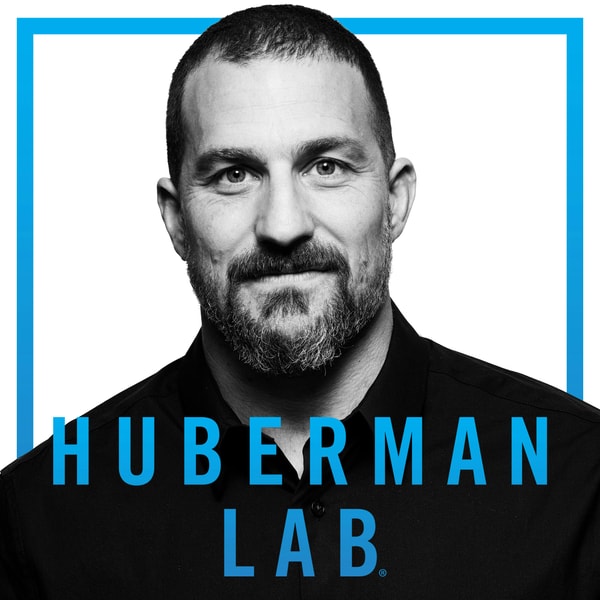
Huberman Lab
Scicomm Media
The Huberman Lab podcast is hosted by Andrew Huberman, Ph.D., a neuroscientist
and tenured professor in the department of neurobiology, and by courtesy,
psychiatry and behavioral sciences at Stanford School of Medicine. The podcast
discusses neuroscience and science-based tools, including how our brain and its
connections with the organs of our body control our perceptions, our behaviors,
and our health, as well as existing and emerging tools for measuring and
changing how our nervous system works. Huberman has made numerous significant
contributions to the fields of brain development, brain function, and neural
plasticity, which is the ability of our nervous system to rewire and learn new
behaviors, skills, and cognitive functioning. He is a McKnight Foundation and
Pew Foundation Fellow and was awarded the Cogan Award, given to the scientist
making the most significant discoveries in the study of vision, in 2017. Work
from the Huberman Laboratory at Stanford School of Medicine has bee
Huberman Lab
Scicomm Media
The Huberman Lab podcast is hosted by Andrew Huberman, Ph.D., a neuroscientist
and tenured professor in the department of neurobiology, and by courtesy,
psychiatry and behavioral sciences at Stanford School of Medicine. The podcast
discusses neuroscience and science-based tools, including how our brain and its
connections with the organs of our body control our perceptions, our behaviors,
and our health, as well as existing and emerging tools for measuring and
changing how our nervous system works. Huberman has made numerous significant
contributions to the fields of brain development, brain function, and neural
plasticity, which is the ability of our nervous system to rewire and learn new
behaviors, skills, and cognitive functioning. He is a McKnight Foundation and
Pew Foundation Fellow and was awarded the Cogan Award, given to the scientist
making the most significant discoveries in the study of vision, in 2017. Work
from the Huberman Laboratory at Stanford School of Medicine has bee