
Inside the Fastest-Growing Category in AI: Scott Wu, CEO of $26B Cognition
Sourcery
22 HOURS AGO
Inside the Fastest-Growing Category in AI: Scott Wu, CEO of $26B Cognition
Inside the Fastest-Growing Category in AI: Scott Wu, CEO of $26B Cognition
Sourcery
22 HOURS AGO
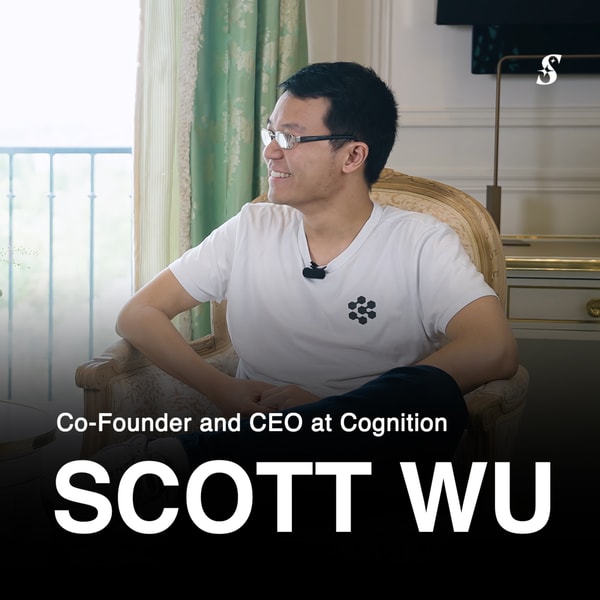
In this episode, Scott Wu, CEO of Cognition, discusses the rapid evolution of autonomous coding agents, the strategic acquisition of Windsurf, and the company's decision to remain independent. He shares insights on measuring AI productivity through business outcomes, the future of software engineering, and the origin story of Devin, from a MongoDB fix to deployments at major enterprises.
Scott Wu describes the explosive growth of Devin, which now writes 95% of Cognition's code and has seen customer usage increase 11-12x in six months. He emphasizes measuring AI productivity through business outcomes rather than token counts. The acquisition of Windsurf was negotiated over a weekend, with integration taking months to resolve customer relationships and team merging. Wu explains why Cognition remains independent, citing model neutrality and the need for independence to win. He argues against a single entity controlling AGI, advocating for an open AI future. Wu discusses why enterprises prefer working with an applied AI lab like Cognition over a model provider, emphasizing the need for organizational change in planning and specs. He comments on the six-month singularity debate, noting that while Devin already writes most of its own code, human irrelevance in six months is unlikely due to practical constraints. Wu recounts the early days of building coding agents, where a key moment came when a co-founder used his agent to fix a MongoDB setup issue, marking the first belief that an AI coding agent could work. He explores AI's potential beyond efficiency, focusing on creating abundant, self-driving software for everyday experiences.
00:00
00:00
Devin now writes 95% of Cognition's code.
10:03
10:03
The deal was negotiated over a weekend.
28:46
28:46
Human irrelevance in six months is unlikely
35:49
35:49
That was the first moment we believed an AI coding agent could work.
