The Neuroscience Of How To Improve Your Memory & Focus - Dr Charan Ranganath - #939
Modern Wisdom
2025/05/10
The Neuroscience Of How To Improve Your Memory & Focus - Dr Charan Ranganath - #939
The Neuroscience Of How To Improve Your Memory & Focus - Dr Charan Ranganath - #939
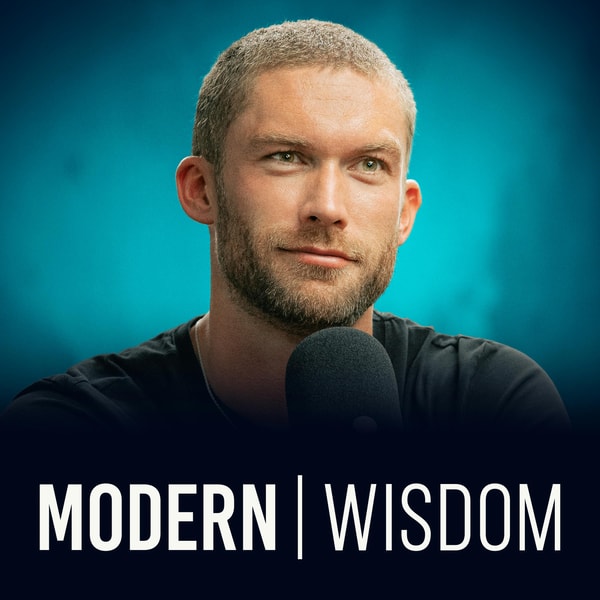
Modern Wisdom
2025/05/10
This podcast explores the science of memory with cognitive neuroscientist Dr. Charan Ranganath, delving into why we remember some events vividly while forgetting others, and how memory shapes our present and future.
Dr. Ranganath explains that memory is not a perfect recording but a reconstructive process, crucial for planning and imagination, not just recalling the past. He introduces the MEDIC acronym (Meaning, Error, Distinctiveness, Importance, Context) to predict what we'll remember, emphasizing that error-driven learning and distinctiveness are key. Forgetting is often a retrieval failure due to context shifts, not decay. The discussion covers how emotions bias recall, creating a loop where mood influences which memories surface. Practical advice includes immersing in sensory details to create distinctive memories and using a 'well-done list' to counter negative biases. The episode also debunks myths, noting that memory is effortful and intentional, and that super-rememberers often rely on expertise and pattern recognition rather than raw capacity.
00:00
00:00
Memory is crucial for understanding the present, planning, and imagining the future
04:34
04:34
Our brains evolved to remember important, surprising, or emotionally charged information
09:00
09:00
Exceptional memory stems from deep expertise and pattern recognition
10:28
10:28
Remembering is not replaying the past but reconstructing it into a story.
18:42
18:42
Importance is what the brain deems evolutionarily significant.
25:34
25:34
Sharing trauma reduces shame and provides support.
26:54
26:54
Memories are not fixed
35:55
35:55
Immersing in uniqueness creates memorable contexts.
39:30
39:30
Learning should be hard, not easy.
45:32
45:32
Memory should be a co-pilot, not the driver.
54:51
54:51
Emotions increase contrast rather than volume in memory
57:58
57:58
Memory prioritizes the most significant and arousing parts of experiences
1:00:55
1:00:55
Learning can occur without explicit memory.
1:04:34
1:04:34
Novelty is prediction error that drives learning
1:07:49
1:07:49
Days felt slower but weeks felt faster.
1:11:05
1:11:05
Memory is effortful and intentional.
