
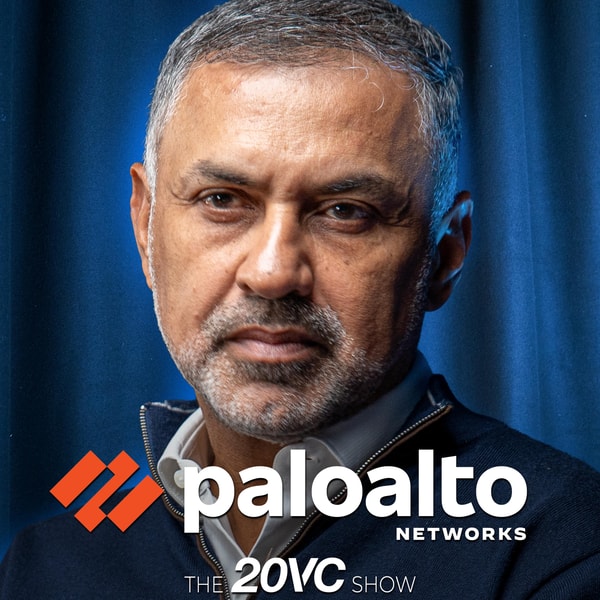
20VC: Nikesh Arora on the Frontier Model Problem: Breadth vs Depth | The Future of Token Costs | Memory Becoming the Moat | Where Value Accrues: Infra, Models, or Apps? | Why Enterprise AI is Not Ready & Systems of Record vs Systems of Intelligence
20VC: Nikesh Arora on the Frontier Model Problem: Breadth vs Depth | The Future of Token Costs | Memory Becoming the Moat | Where Value Accrues: Infra, Models, or Apps? | Why Enterprise AI is Not Ready & Systems of Record vs Systems of Intelligence
20VC: Nikesh Arora on the Frontier Model Problem: Breadth vs Depth | The Future of Token Costs | Memory Becoming the Moat | Where Value Accrues: Infra, Models, or Apps? | Why Enterprise AI is Not Ready & Systems of Record vs Systems of Intelligence
Nikesh Arora, CEO of Palo Alto Networks, shares his perspective on the future of AI, arguing that token prices will plummet by 90% and that most enterprises are misusing the technology. He discusses the strategic differences between consumer and enterprise AI, the importance of memory as a competitive moat, and the need for a fundamental rethinking of business workflows rather than incremental adaptation.
Arora predicts a 90% drop in token costs, which he sees as bullish for AI adoption, as it will drive increased consumption. He criticizes enterprises for only marginally adapting current workflows instead of redesigning their companies around AI, predicting that roles in marketing, HR, and finance could be cut in half within three years. He argues that AI applications will have opinions, unlike traditional SaaS, and that value will accrue not just at the model layer but also in memory and context, creating a significant moat. Arora warns that CEOs must lead AI transformation themselves rather than delegating it, and that companies should buy off-the-shelf AI applications rather than building from scratch. He also discusses the need for better guardrails and the inevitability of Chinese open-source models in the ecosystem.
00:00
00:00
AI is an accelerant for cybersecurity
07:40
07:40
Enterprises require zero false positives for agentic decisions
11:46
11:46
Most enterprises are not using AI correctly
15:31
15:31
AI will cut G&A roles in half within three years.
16:00
16:00
AI applications will have opinions, unlike SaaS.
22:22
22:22
Token prices will drop to one-tenth of current levels.
24:00
24:00
Most marketing is wasted
25:11
25:11
Token costs will drop 90%
28:21
28:21
Memory creates context in applications.
31:22
31:22
The challenge is getting customer attention to fix vulnerabilities
32:03
32:03
AI stops threats at the gate and detects intruders inside.
35:22
35:22
Established companies must take a gradual, Tesla-like approach.
37:11
37:11
Memory and context as a moat.
40:01
40:01
Leaders must prioritize AI in their roadmaps
42:02
42:02
Darwinian competition motivates leaders through fear and ambition
49:08
49:08
Missing multiple tricks can lead to obsolescence.
52:01
52:01
The bull case leverages platformization and AI capabilities to become the default security provider.
56:00
56:00
Open source models are not dangerous, but their origin matters.
1:02:02
1:02:02
Willingness to walk away strengthens leverage.
1:06:09
1:06:09
Don't confuse effort with commitment.
1:10:02
1:10:02
Focus on daily enjoyment and gratitude
