
采访诺兰:你是西方文明黄昏时代的吟游诗人吗?
独树不成林
Jul 31
采访诺兰:你是西方文明黄昏时代的吟游诗人吗?
采访诺兰:你是西方文明黄昏时代的吟游诗人吗?
独树不成林
Jul 31
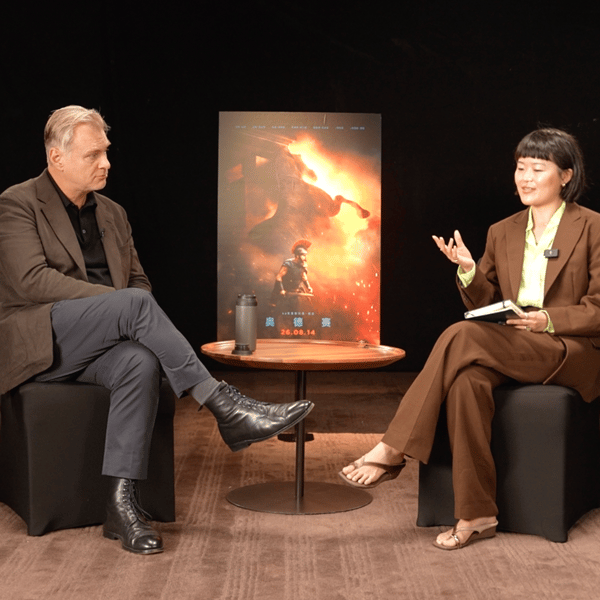
In this episode, Christopher Nolan sits down for an in-depth conversation about his upcoming adaptation of Homer's Odyssey, exploring the epic's timeless themes of civilization, morality, and storytelling. The discussion bridges the ancient world and our modern era, touching on everything from the Bronze Age collapse to the nature of cinematic language.
Nolan begins by framing the Odyssey within the context of civilizational rise and fall, connecting its themes to the Bronze Age collapse and the ideas of destruction explored in his previous film, Oppenheimer. He argues that the epic's core theme of xenia, or hospitality, is a foundational principle of civilization, a golden rule of mutual respect whose breakdown leads to societal ruin. The conversation then contrasts Greek and Christian perspectives on hubris and atonement, questioning whether Odysseus should repent for his pride and what personal remorse can achieve after catastrophe. Nolan defends the use of familiar narrative mechanisms in storytelling, explaining how filmmakers must address greatness in a democratic age, often by apologizing for it. He discusses film as a universal language, where conventions can be bent but not discarded, and innovation relies on tradition. Finally, he offers a profound take on the gods of the Odyssey, suggesting they are real to the characters as projections of human psychology onto the natural world, a pre-scientific way of explaining reality.
03:39
03:39
Civilization depends on mutual respect.
06:57
06:57
Xenia is a form of mutual respect that speaks to our modern world.
12:00
12:00
Film's universal language allows conventions to be bent or broken.
17:09
17:09
Gods are real but projected by people.