
Michael Mauboussin on the ’Success Equation’
Knowledge at Wharton
2013/03/06
Michael Mauboussin on the ’Success Equation’
Michael Mauboussin on the ’Success Equation’
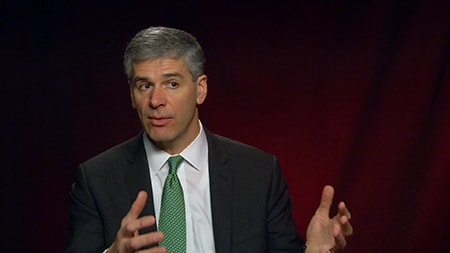
Knowledge at Wharton
2013/03/06
This episode explores the subtle yet powerful interplay between skill and luck in high-stakes domains like investing, sports, and business—where outcomes often mislead us about the true sources of success or failure.
The conversation unpacks how rising skill levels across fields paradoxically amplify the role of luck in determining outcomes, making it harder to distinguish genuine expertise from random variation. Luck is defined not by randomness alone, but by its uncontrollability, impact, and existence of plausible alternatives—shaping distinct strategies for favorites (simplify) versus underdogs (complicate). Flank strategies are highlighted as underutilized paths to asymmetric advantage, while overconfidence is examined as both a cognitive trap and, paradoxically, an entrepreneurial catalyst. Better metrics—persistent and predictive, like on-base percentage—are essential for sound judgment. The 'expert squeeze' reveals when algorithms outperform humans in stable environments, while collective intelligence gains ground in turbulent ones. Finally, the discussion emphasizes grounding financial decisions in statistical rigor rather than macro-narratives, and underscores how teaching and lifelong learning help bridge theory, evidence, and real-world practice.
00:03
00:03
As skill improves in activities involving skill and luck, luck becomes more important in determining outcomes
05:15
05:15
When you're the favorite, simplify the game; when you're the underdog, complicate it
07:21
07:21
Flank strategies are underutilized across business, sports, and military
09:35
09:35
A useful statistic must have persistence and predictive value
14:30
14:30
Computers are taking over tasks in stable environments, while in unstable and nonlinear ones, experts are poor predictors
17:10
17:10
Use statistics to assess money managers' processes and avoid overconfidence by widening projected outcome ranges