Iran, protests, and sanctions
Planet Money
Feb 07
Iran, protests, and sanctions
Iran, protests, and sanctions
Planet Money
Feb 07
This episode explores how decades of U.S. sanctions have shaped Iran’s economy, politics, and society — not as a clean diplomatic tool, but as a force that deepened hardship, reshaped state power, and helped ignite the latest wave of protests.
U.S. sanctions on Iran, now in place for 47 years, have profoundly distorted the country’s economic development — fueling inflation, currency collapse, and widespread public despair. The episode traces three key eras: the revolutionary 1979–80s, when anti-imperial ideology and the hostage crisis cemented economic isolation; the 1990s, when Iran cautiously liberalized trade and built a vibrant middle class despite sanctions; and the post-2012 period, when comprehensive nuclear-related sanctions triggered sharp contraction. Though the 2015 nuclear deal offered hope, global financial institutions’ fear of U.S. penalties prevented meaningful reintegration — undermining the agreement’s promise. Trump’s 2018 withdrawal worsened conditions, empowering the IRGC economically while immiserating ordinary citizens. Far from pressuring political change, sanctions intensified repression and eroded trust in diplomacy — making them less a substitute for war than a different kind of violence with lasting human costs.
00:00
00:00
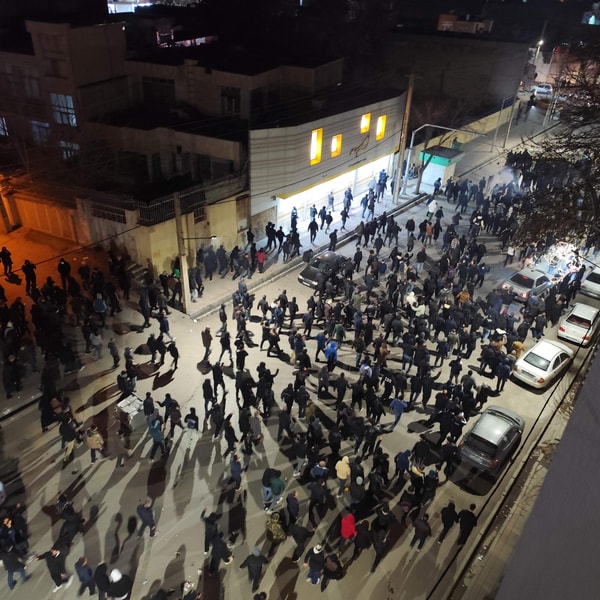
People chanted against the dictator and felt hopeful during the Tehran protest
03:03
03:03
Independent observers estimate tens of thousands were killed in Iran's crackdown on protests
06:14
06:14
U.S. sanctions on Iran have been in place for 47 years
12:20
12:20
The 1979 U.S. embassy hostage situation significantly radicalized Iran's constitutional debate over foreign investment and economic sovereignty
15:28
15:28
The Iran-Iraq war made it difficult for Iran to maintain a closed economy
18:20
18:20
Iran lowered tariffs, reopened its stock exchange, and attracted foreign investment in the 1990s
27:53
27:53
U.S. officials failed to deliver promised sanctions relief because global banks refused to re-engage with Iran due to over-compliance culture
