scripod.com

The Incidental Patient Conundrum

Shownote

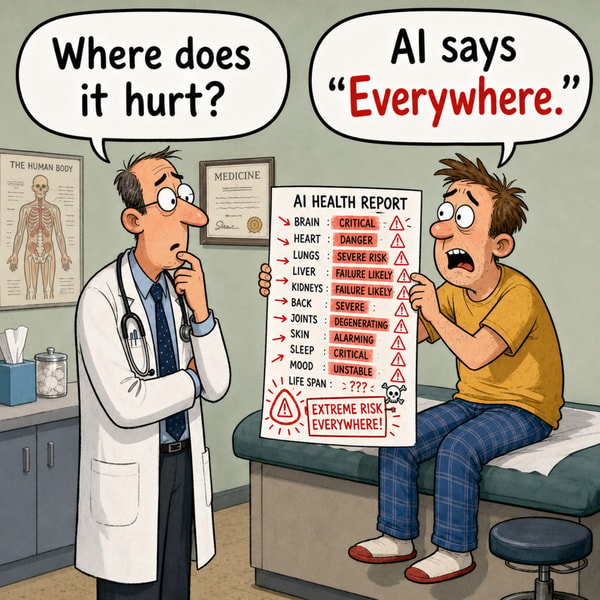
Modern medicine has been shaped by a quiet discipline: do not look everywhere at once. A symptom, age, family history, or known risk turns the search in a particular direction. That system leaves gaps. Some disease is found late. Some people suffer because the body did not send a clear enough signal soon enough. AI-assisted screening changes the starting point. A full-body scan, lab panel, genetic profile, medical history, wearable record, and family pattern can be combined into a living map of risk. The system can notice small changes before a person feels sick and return findings that were once invisible, unaffordable, or too scattered for a doctor to connect. That creates a strange kind of abundance. The body contains countless shadows, markers, nodules, mutations, variations, and probabilities. Some are early warnings. Some are harmless. Some will remain unclear for years. Once AI makes them visible, the limit may no longer be what medicine can detect. It may be what medicine can responsibly name. The Conundrum: One side says this knowledge belongs to the patient. Earlier detection can mean earlier treatment, less suffering, better planning, and a stronger base of medical evidence before disease reaches crisis. A health system that waits for symptoms may look careful, but it also accepts preventable harm. The other side says detection can become its own injury. An ambiguous finding can turn a healthy person into a patient overnight. It can trigger scans, specialist visits, biopsies, medication, insurance consequences, and years of worry. The person may gain information without gaining usable control. When AI can reveal nearly every possible warning sign inside the body, what should medicine treat as responsible knowledge: everything the system can see, or only what can be acted on without making healthy people live as patients?

Highlights

This podcast explores a profound ethical dilemma emerging from AI-assisted full-body scans: the ability to detect countless potential health risks before any symptoms appear. While this technology promises early intervention, it also creates a new class of 'pre-patients' burdened by ambiguous findings, raising the question of whether medicine should disclose everything it can see or only what can be acted upon without causing harm.
00:01
Early detection can save lives, but also raises issues like insurance discrimination.
05:26
Disclose all risks or only actionable findings?
10:52
80% of cancer deaths averted were due to early screening.
22:16
Overdiagnosis finds harmless anomalies more often than lethal cancers
25:04
AI turns healthy people into the 'worried well'

Chapters

The Incidental Patient Conundrum: When AI Scans Reveal Too Much
00:00
The Core Question: Should We Disclose Every Risk or Only Actionable Findings?
05:26
The High Cost of Waiting: Why Early Screening Saves More Lives Than Treatment
10:52
The Paradox of Precision: How AI Detects Cancers but Triggers Harmful Diagnostic Cascades
16:41
The Permanent Risk Record: How AI Screening Turns Healthy People into 'Worried Well' Patients
25:04

Transcript

Brian Maucere: Hey, what's going on, everybody? Welcome to another Saturday Conundrum. I'm Brian, one of the co-hosts of The Daily AI Show. I'm really happy you guys are here. I feel like we have a good one here. This one's called The Incidental Patient Co...