
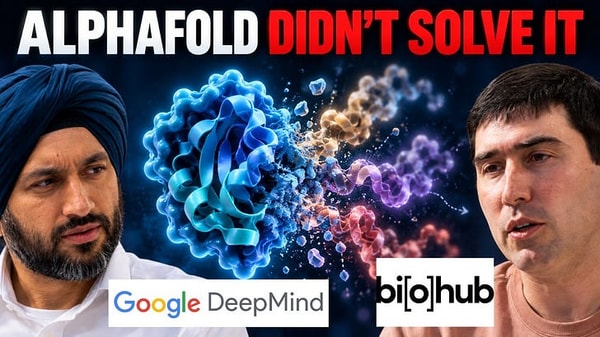
Why AlphaFold Didn't Solve Protein Folding — Pushmeet Kohli, Google DeepMind & Sal Candido, Biohub
Latent Space: The AI Engineer Podcast
16 HOURS AGO
Why AlphaFold Didn't Solve Protein Folding — Pushmeet Kohli, Google DeepMind & Sal Candido, Biohub
Why AlphaFold Didn't Solve Protein Folding — Pushmeet Kohli, Google DeepMind & Sal Candido, Biohub
Latent Space: The AI Engineer Podcast
16 HOURS AGO
This panel examines why AlphaFold was a landmark without being the end of protein biology. Pushmeet Kohli and Sal Candido discuss how to find useful biological scaling laws, choose between better models and better data, move from isolated proteins toward whole systems, and build AI that is both powerful and trustworthy.
The conversation argues that biology needs a problem-first approach rather than a rigid faith in either scaling models or generating data. The speakers explain why imperfect metagenomic data can still help protein language models, why AlphaFold benefited from scientific inductive bias and existing structural data, and why protein folding remains incomplete because proteins are dynamic, disordered, and context-dependent. They call for richer measurements such as cryo-EM, models of broader biological systems, and methods for extracting scientific knowledge from model internals. The discussion closes by distinguishing model interpretability from calibrated, trustworthy behavior and by arguing that major health advances will require both incremental progress and ambitious 10x breakthroughs.
01:14
01:14
The real work is finding the scaling law.
05:54
05:54
The problem comes first
08:30
08:30
Define the problem first
11:32
11:32
Scientific intuition can give models an unfair advantage
14:20
14:20
The next challenge is finding the information models need
16:57
16:57
AlphaFold did not solve all of protein dynamics
19:49
19:49
From spokes to whole bicycles
21:52
21:52
The challenge is extracting knowledge from the machine
24:47
24:47
Calibration matters more than perfect scores
27:34
27:34
Future models may explain AlphaFold
30:37
30:37
Start by asking what a 10x improvement would require
