
The Creators of Model Context Protocol
Latent Space: The AI Engineer Podcast
2025/04/03
The Creators of Model Context Protocol
The Creators of Model Context Protocol
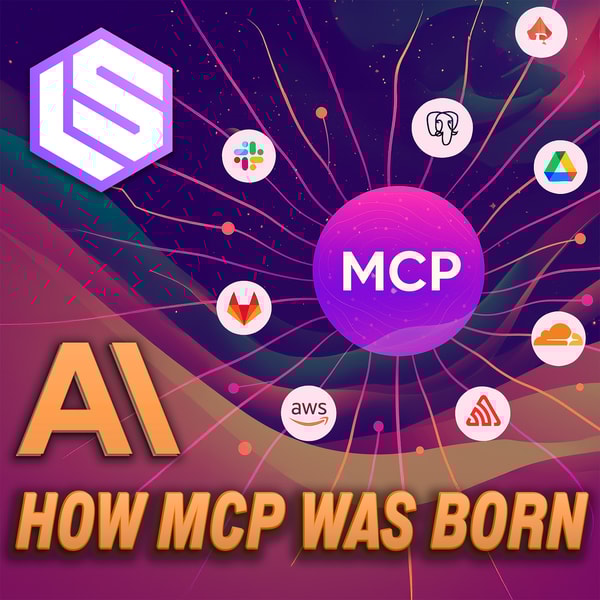
Latent Space: The AI Engineer Podcast
2025/04/03
This podcast delves into the Model Context Protocol (MCP), a groundbreaking standard for AI applications developed by Anthropic. Created by David Soria Parra and Justin Spahr-Summers, MCP has rapidly gained traction, surpassing competitors like OpenAPI in popularity and functionality. The discussion explores MCP's origins, its technical underpinnings, and how it enhances AI capabilities through innovative integrations.
MCP originated from the need to address limitations in existing tools at Anthropic. Developed over a month and a half, it focuses on cloud desktops and IDE integrations. Its design draws inspiration from the Language Server Protocol (LSP) while avoiding over-specification, allowing full leverage of LLMs with unstructured data. Compared to OpenAPI, MCP offers purpose-built tools that are more suitable for LLMs, although translators between the two exist. Building MCP servers involves selecting programming languages and SDKs, enabling richer user experiences through composability and model independence. Agents in MCP balance simplicity and tool nesting, giving users control over subsets of tools. Trust and authorization remain challenges, but the official repo provides core servers for contributions. The future roadmap includes transitioning to stateless servers and exploring OAuth 2.1 for authorization. Community involvement is crucial for MCP's development, emphasizing open-source governance and collaboration. The creators express a desire for more clients supporting the full specification and discuss potential integrations with platforms like the Godot Engine and Cloudflare.
00:00
00:00
Everyone's now on the MCP bandwagon
01:46
01:46
MCP is designed like a USB-C port for AI systems
03:08
03:08
MCP started with internal developer tooling at Anthropic in July 2024.
06:24
06:24
Project started after David's pitch in July
24:32
24:32
LLMs should process raw data to maximize flexibility
30:26
30:26
OpenAPI is somewhat stateful but more statefulness will be popular for AI applications.
40:59
40:59
The concept of combining different MCPs into a super MCP is intriguing
41:13
41:13
Model independence allows flexibility in LLM summarization
42:06
42:06
Building graphs of MCP servers that can interact richly.
48:51
48:51
Core MCP principle involves client, application, and user involvement.
49:41
49:41
Tools in MCP should be model-controlled.
1:00:19
1:00:19
MCP allows building servers to optimize model answers after multiple tries.
1:09:40
1:09:40
Separate servers suggested for different authorizations
1:13:03
1:13:03
Governance in open source should balance openness with agility.
1:17:45
1:17:45
MCP client or server integrated with Godot Engine for AI game playtesting