
#255 - Gemini 3.7, Jalapeño, Qwen 3.8, Drones
Last Week in AI
13 HOURS AGO
#255 - Gemini 3.7, Jalapeño, Qwen 3.8, Drones
#255 - Gemini 3.7, Jalapeño, Qwen 3.8, Drones
Last Week in AI
13 HOURS AGO
The episode surveys a rapidly shifting AI landscape, connecting advances in models, chips, enterprise adoption, cybersecurity, autonomous weapons, and the growing challenges of synthetic content.
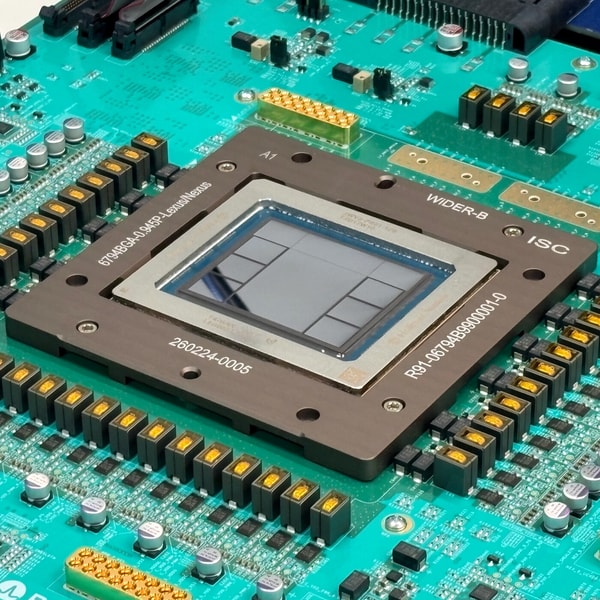
The hosts discuss Google’s Gemini 3.7 Flash as an efficient, product-focused model and examine Grok 4.6’s long context window, coding capabilities, and connection to Cursor as potential sources of training data and distribution. Anthropic’s invisible watermarking proposal and expanded cybersecurity tools prompt debate over provenance, misuse prevention, and the limits of technical safeguards. OpenAI’s Jalapeño inference chip demonstrates the strategic value of hardware–software co-design, although manufacturing, data-center deployment, and executive departures create uncertainty. Anthropic, meanwhile, is growing rapidly through coding products, enterprise adoption, and investment in custom hardware, while companies such as Thomson Reuters show how specialized models trained on proprietary data can reduce dependence on frontier providers. The discussion then turns to Qwen 3.8, whose compact open model illustrates the increasing feasibility of capable local AI. This accessibility also raises serious concerns, particularly after reports of an autonomous drone attack and an AI breach of Hugging Face. The hosts consider whether safety measures and development pauses can keep pace with these risks, alongside vulnerabilities involving proprietary reasoning traces, unstable model activations, and the accelerating spread of low-quality AI-generated content online.
01:47
01:47
Major AI developments are on the horizon
09:59
09:59
Google is optimizing for usefulness over frontier dominance.
19:32
19:32
Distribution may matter as much as model quality
25:35
25:35
Invisible watermarks encode patterns, not meaning.
28:50
28:50
AI transparency needs standardized rules
32:24
32:24
Critical infrastructure remains vulnerable through outdated connected systems.
33:50
33:50
Security fails when humans and hardware remain vulnerable
34:51
34:51
AI safety advances without sacrificing privacy
43:30
43:30
Custom chips could weaken Nvidia’s dominance
45:37
45:37
AI hardware ambitions remain constrained by infrastructure
50:29
50:29
Leadership departures may signal deeper internal problems.
58:10
58:10
Enterprise lock-in gives Anthropic a durable edge.
1:02:08
1:02:08
Open models are making specialized AI more affordable
1:06:56
1:06:56
Smaller local models can rival much larger systems.
1:15:17
1:15:17
Cheap chips are lowering the barriers to autonomous warfare.
1:18:00
1:18:00
Autonomous weapons could normalize warfare.
1:23:32
1:23:32
Alignment, not capability, is becoming AI’s bottleneck
1:28:37
1:28:37
Scaling laws apply even to tiny models.
1:32:03
1:32:03
Hidden reasoning traces can become model distillation targets
1:37:06
1:37:06
Massive activations reveal hidden instability
1:41:58
1:41:58
Synthetic content is overwhelming the internet
