
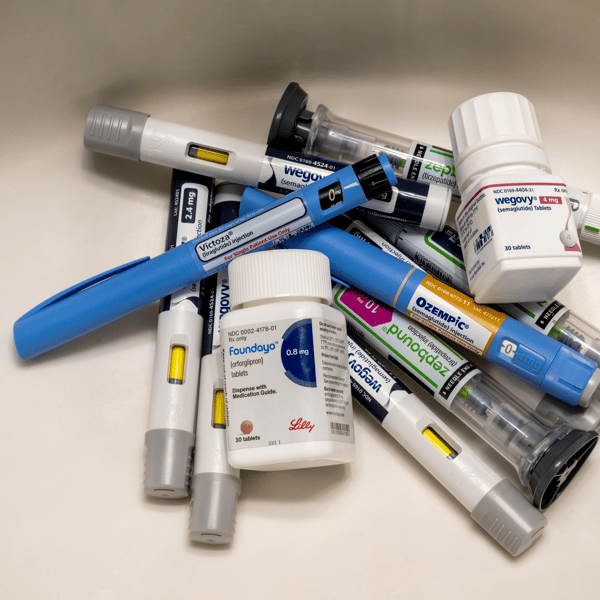
People are running their own experiments with GLP-1s — with stunning results
People are running their own experiments with GLP-1s — with stunning results
People are running their own experiments with GLP-1s — with stunning results
This podcast explores the rapidly expanding use of GLP-1 drugs like Ozempic and Wegovy, moving beyond their approved uses for diabetes and obesity. It examines the phenomenon of people using these medications for a wide range of off-label conditions, creating what experts describe as a large-scale, uncontrolled experiment with unknown long-term consequences.
The discussion reveals that GLP-1 drugs are now understood to primarily affect the brain, altering chemistry to reduce appetite. While initially seen as appetite suppressants, patients are reporting unexpected benefits for conditions like addiction, IBS, and brain fog, leading to widespread self-experimentation facilitated by telemedicine and black markets. This has created a population-wide experiment where anecdotal evidence is strong but formal research lags behind. The conversation highlights significant concerns about unknown long-term effects, including rare but serious side effects like eye damage and gastroparesis, and the lack of regulatory systems to monitor informal data. A particular worry is the 600% increase in use among children during critical developmental stages, where long-term safety data is absent. The hope is that more data will emerge in the coming decade to clarify the true risks and benefits of these powerful drugs.
00:03
00:03
These drugs primarily affect the brain, not just the gut
05:53
05:53
65% of users want to stay on the drugs even if they stop working
15:00
15:00
Regulators lack systems to monitor informal data
21:00
21:00
We are learning in real time without long-term data.
